Saved Bookmarks
This section includes 7 InterviewSolutions, each offering curated multiple-choice questions to sharpen your Current Affairs knowledge and support exam preparation. Choose a topic below to get started.
| 1. |
What is the value of absolute permeability of free space ? Give its units. |
| Answer» Solution :`mu_0 = 4 PI xx 10^(-7) T mA^(-1)` but the unit MAY also be written as `WB A^(-1) m^(-1)`. | |
| 2. |
Two identical charged spheres suspended from a common point by two massless strings of lengths I, are initially at a distance d(d ltlt l) apart because of their mutual repulsion. The charges begin to leak from both the spheres at a constant rate. As a result, the spheres approach each other with a velocity v. Then v varies as a function of the distance x between as: |
|
Answer» `v prop X^(-1/2)` 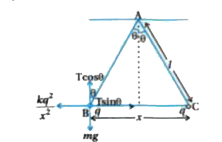 `Tsintheta =F` and `Tcostheta=mg` `therefore tantheta =F/(mg)` But `tantheta =(d/2)/(sqrt(L^(2)-d^(2)/4))` `=(kq^(2))/(d^(2)mg)` `therefore (kq^(2))/(d^(2)mg)` `therefore d/(2l) =(kq^(2))/(d^(2)mg) [therefore d lt lt l]` `therefore Q^(2) prop d^(3/2)` `therefore (DQ)/(dt) prop d^(1/2v)` `therefore v prop 1/d^(1/2)` |
|
| 3. |
At 16^(@)C two open organ pipes when wounded together produce 51 beats in 3 seconds. How many beats/second will be produced, if the temperature rises to 51^(@)C ? (Neglect increase in length of the pipe) |
|
Answer» 10 beats |
|
| 4. |
A : Thin films such as soap bubble or a thin layer of oil on water show beautiful colours when illuminated by sunlight. R : The colours are obtained by dispersion of light only. |
|
Answer» Both A and R are TRUE and R is the correct explanation of A |
|
| 5. |
When a particle undergoes S.H.M., there is always a constant ratio between its displacement and |
|
Answer» period |
|
| 6. |
A frog can be leviated in a magnetic field produced by a current in a vertical soleniod placed below the frog. This is possible because the body of the frog is .......... |
|
Answer» PARAMAGNETIC |
|
| 7. |
Two points P and Q are maintained at the potentials of 10 V and - 4 V respectively. The work done in moving 100 electrons from P to Q is |
|
Answer» `9.60 XX 10^(-17) J` Work done `W_P^Q = q (V_Q - V_P) = (-1.6 xx 10^(-17)) [ (-4V)-(10V)] = + 2.24 xx 10^(-16)J` |
|
| 8. |
de-Broglie wavelength associated with an electron having kinetic energy 500 eV is : |
|
Answer» `0.55Å` |
|
| 9. |
A fraction f_(1)of a radioactive sample decays in one mean life, and a fraction f_2decays in one half life. |
|
Answer» `f_(1) gt f_2` |
|
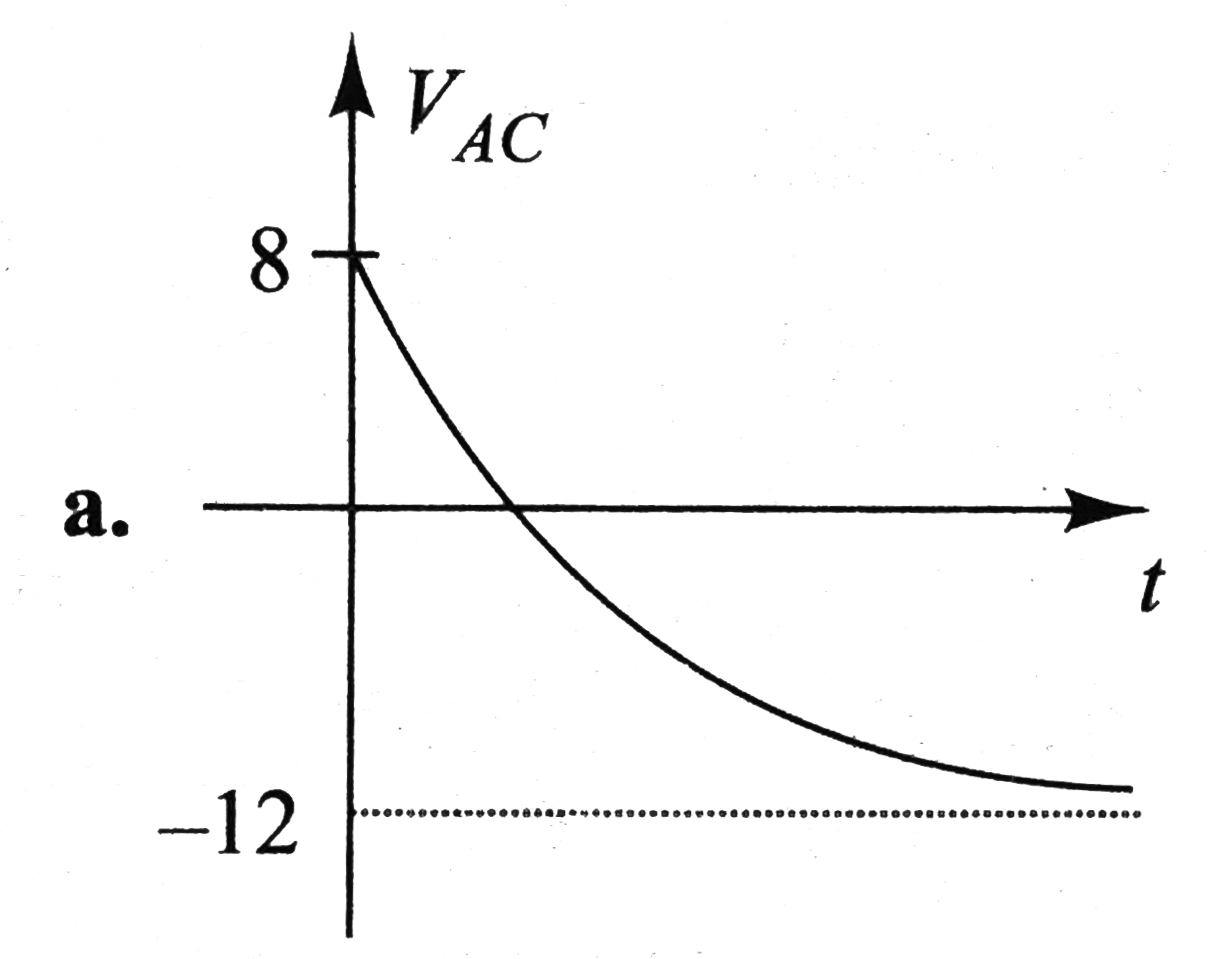
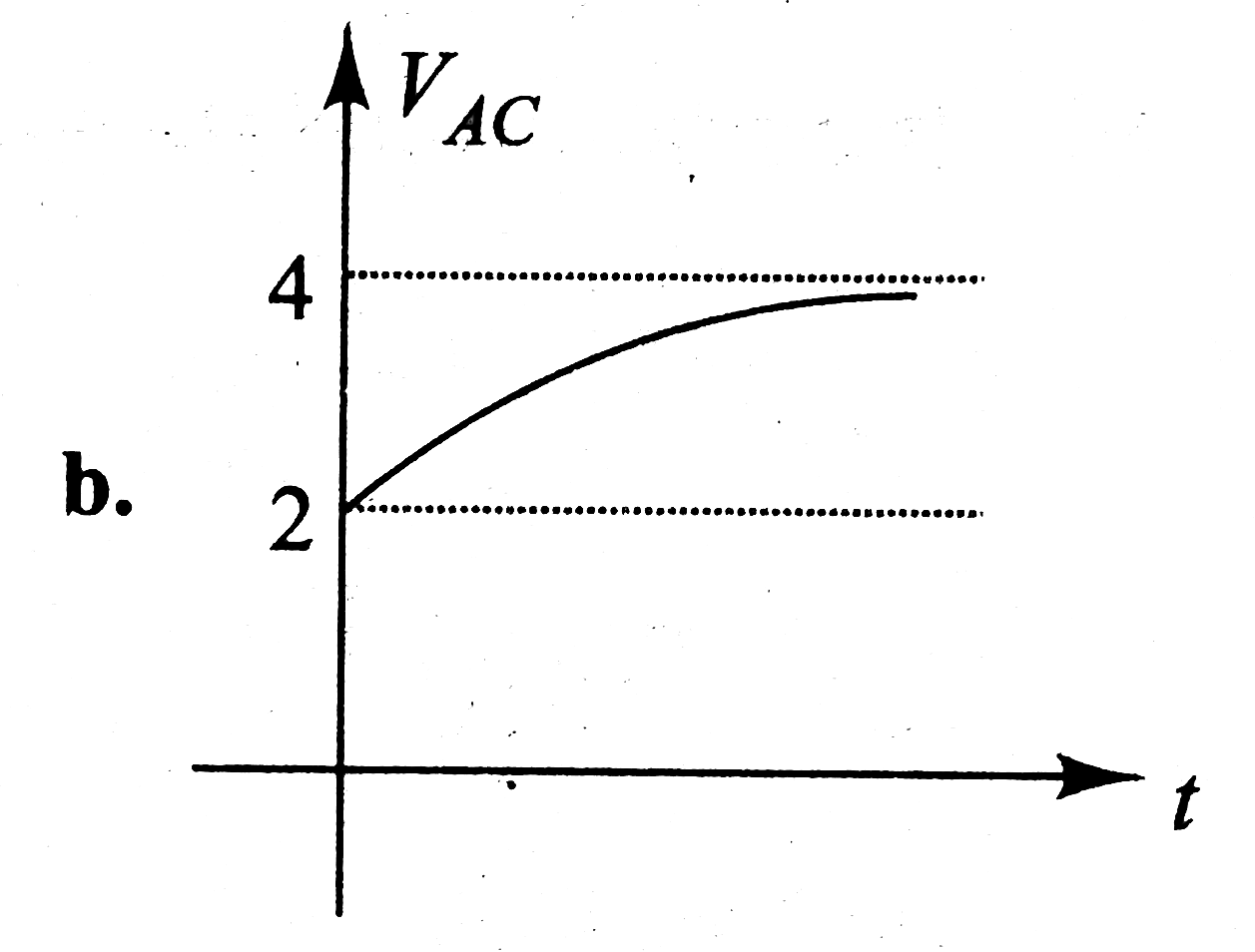
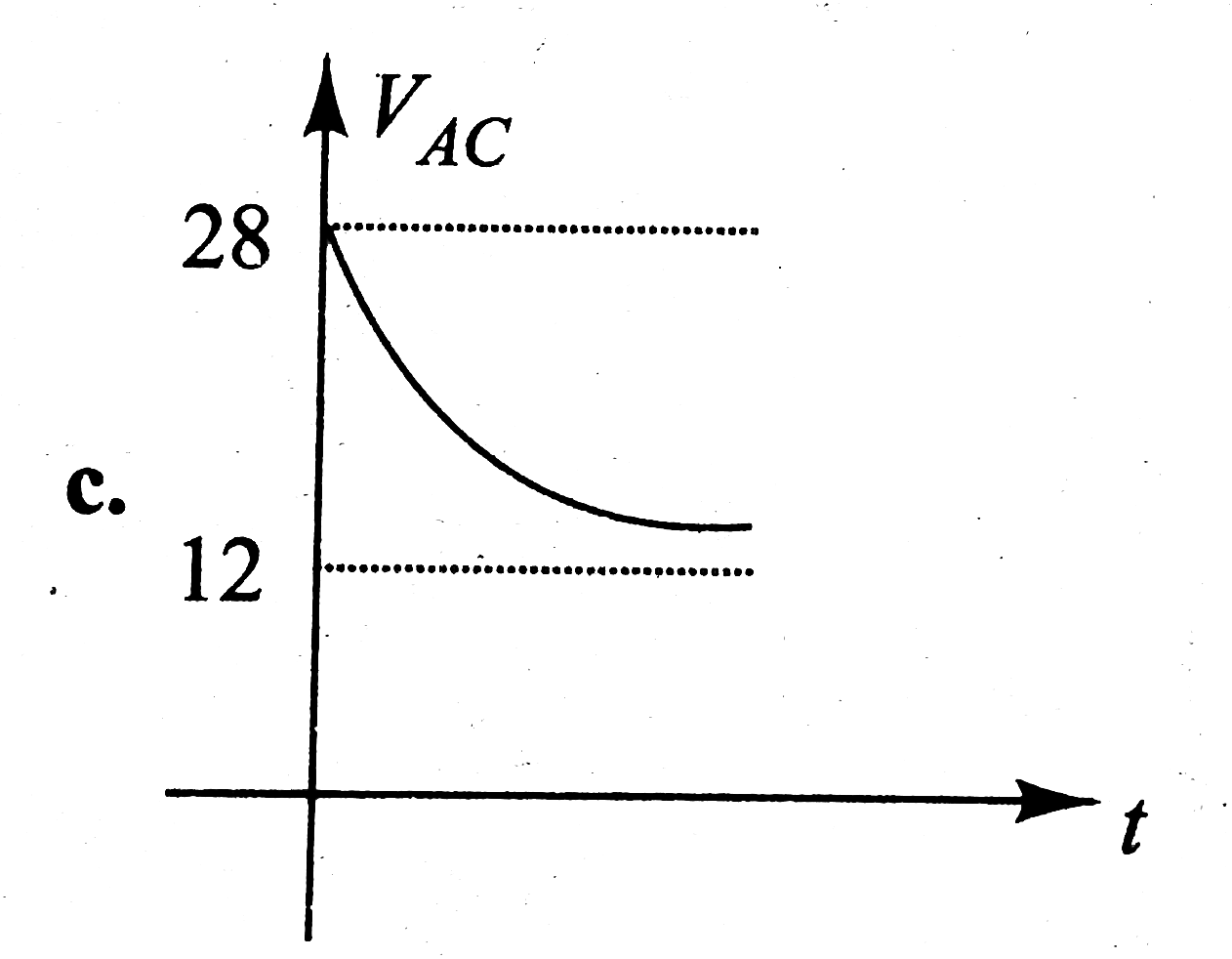
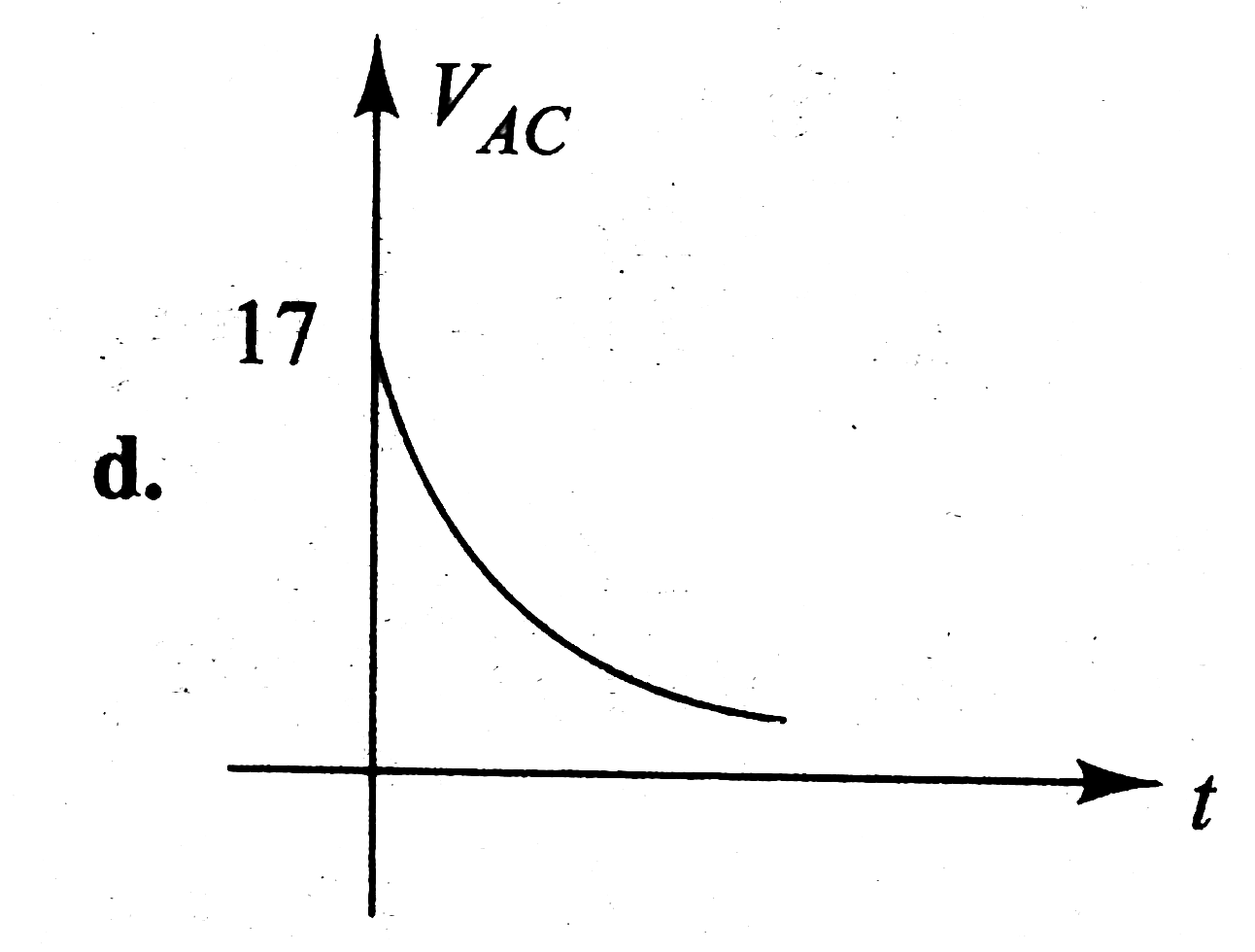
| 10. |
A ship is moving at a constant of 10km/h in the direction of unit vector hati. Initially its position vector relative to a fixed origin is 10(-hati+hatj). A second ship is moving with speed 10sqrt(5) k/h parallel to the vector hati+2hatj and is initially at origin. if the time to reach the minimum speration is 5alpha minutews. Fill alpha im OMR sheet. |
|
Answer» Solution :`v_(1)=10hati km//hr` `v_(2)=10(hati+2hatj)km//hr` `v_(12)rArr-20hatj km//hr` `trArr(10)/(20)rArr30` MINUTES 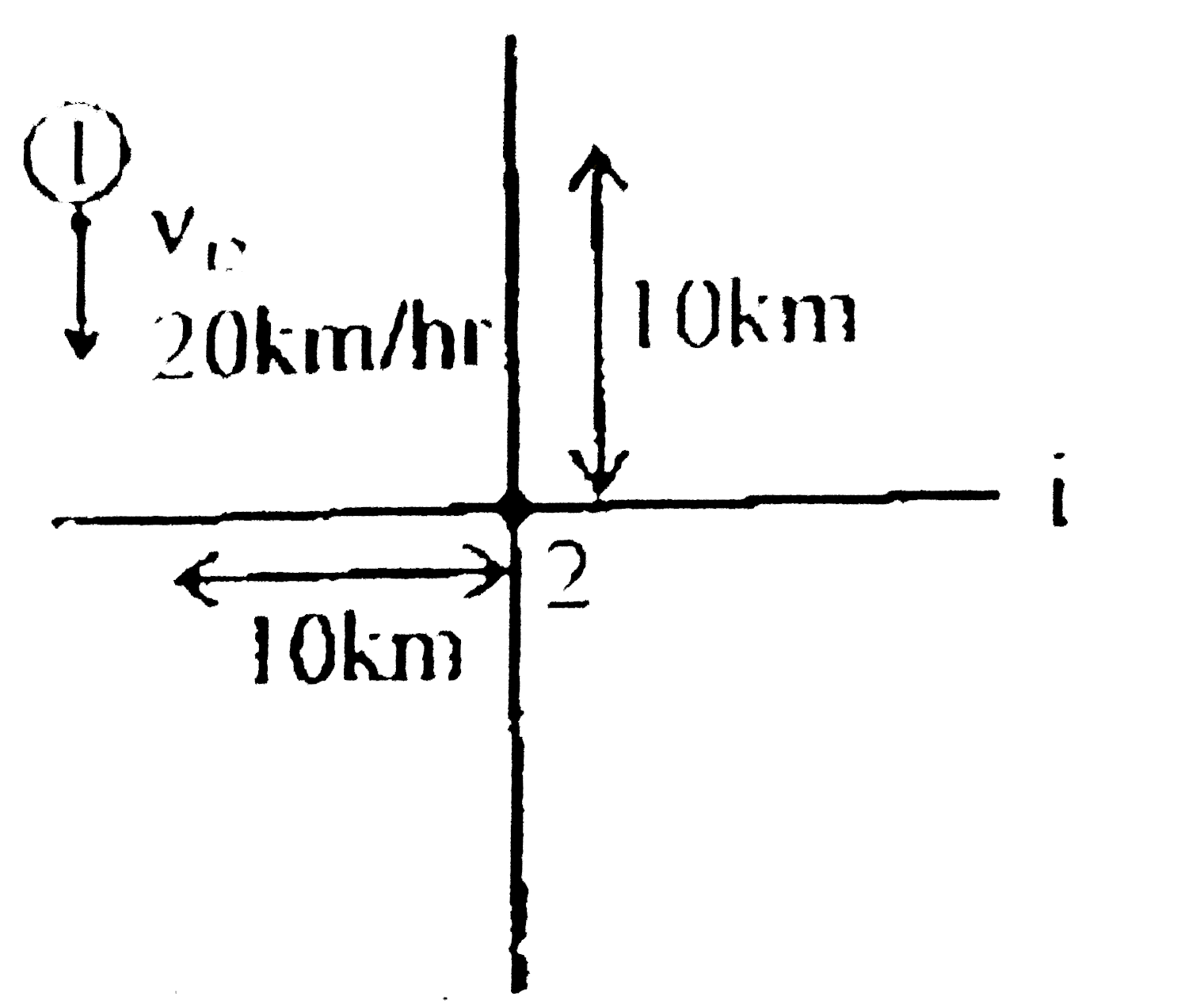
|
|
| 11. |
The focal length of a concave mirror is equal for all colours of light. Is the statement true or false? |
|
Answer» |
|
| 12. |
A positively charged particle is released from rest in an unform electric field. The electric potential energy of the charge |
|
Answer» remains a CONSTANT because the ELECTRICFIELD is uniform. |
|
| 13. |
A radio transmitter, microwave transmitter and a mi crowave receivers are placed in a hilly area. Will the radio receiver in the house get the signal from the radio transmitter? Justify |
| Answer» Solution :YES. Because WAVELENGTH of radiowave is larger than MICROWAVE. | |
| 14. |
Using the laws of conservation of energy and momentum |
|
Answer» Solution :APPLYING laws of conservation of energy and momentum, we obtain `mgDeltay=(mv_x^2)/2+(mv_y^2)/2+(MV^2)/2-MV=mv_x` Noting that `DELTAY =ayt^2//2,Deltax=a_xt^2//2,Deltax = bt^2//2,v_x=a_xt,v_y =a_yt and V = bt` and that `Deltay = (Deltax - DeltaX)`TAN `alpha`we obtain after some simple transformations `a_x=(M gsinalphacos alpha)/(M+m sin^2alpha)` i.e. the same result as in PROBLEM 3.7. The value of a, is obtained from these equations in a similar way. The reaction is obtained from the CONDITION `Q=ma=msqrt(a_x^2+a_y^2)` |
|
| 15. |
Third overtone of a closed organ pipe is in unison with fourth harmonic of an open organ pipe.The ratio of the lengths of the pipes is |
| Answer» ANSWER :B | |
| 16. |
A charged 30 muFcapacitor is connected to a 27 mH inductor. What is the angular frequency of free oscillations of the circuit? |
| Answer» SOLUTION :`omega_1 = (1)/(sqrtLC) = (1)/(sqrt(27 xx 10^(-3) xx 30 xx 10^(-6) )) = 1.11 xx 10^3 sec^(-1)` | |
| 17. |
State and explain Lenz.s law for induced emf. |
|
Answer» Solution :Statement : The polarity of induced emf is such that it TENDS to PRODUCE a current which opposes the CHANGE in MAGNETIC flux that produced it. Diagram:  Explanation : When North pole of a bar-magnet is moved towards the coil (fig.1). emf is induced in the coil. This induces current in the anti-clock wise direction through the coil so as to generate North-pole. This opposes the MOVEMENT of the magnet. When North-pole is moved away from the coil(Fig.2) emf induces again. This current in the clockwise direction through the coil so as to generate South-pole. It opposes the movement of the magnet. |
|
| 18. |
Which line divides India into approximately two equal parts? |
|
Answer» Equator |
|
| 19. |
What is Wheatstonc hridge ? Explain its principle. |
Answer» Solution :`rArr`Wheatstone bridge is special network of four resistors and BATTERY connected as shown in figure below.  `rArr` Four resistors `R_(1) , R_(2) , R_(3) and R_(4)` are connected with battery as shown in figure. `rArr` Battery is connected between A and C called battery arm. `rArr` Galvanometer is connected between B and D hence, it is called galvanometer arm. `rArr` Consider battery is to be ideal (zero internal resistance). `rArr`Current flowing in resistor `R_(1), R_(2), R_(3) and R_(4)` be `I_(1), I_(2), I_(3) and I_(4)`respectively. `rArr` Current will be flowing through all four resistors and galvanometer. In special condition when current through galvanometer is zero (lg = 0) Wheatstone bridge is said to be in balanced condition. `rArr` In balanced condition of Wheatstone bridge `I_(1) = I_(3) and I_(2) = I_(4)` . `rArr` By USING Kirchhoff.s second LAW for LOOP ABDA. `-I_(1) R_(1) + 0 + I_(2) R_(2) = 0 "" [ because I_(g) = 0 ] ` `thereforeI_(1) R_(1) = I_(2) R_(2) "" `... (1) Similarly for loop BCDB, `I_(4) R_(4) + 0 - I_(3) R_(3) = 0` by substituting `I_(3) = I_(1) and I_(4) = I_(2)` `I_(2) R_(4) - I_(1) R_(3) = 0` `therefore I_(1) R_(3) = I_(2) R_(4) ""` ... (2) Comparing equation (1) and (2) , `(R_(1))/(R_(3))= (R_(2))/(R_(4))` `therefore (R_(1))/(R_(2)) = (R_(3))/(R_(4)) " or " (R_(2))/(R_(1)) = (R_(4))/(R_(3))` `rArr` This equation represent principle of Wheatstone bridge which is condition for balance of Wheatstone bridge. `rArr` As an application of Wheatstone bridge value of `R_(1), R_(2), R_(3)` are known and `R_(4)` is unknown then, `R_(4) = R_(3) xx (R_(2))/(R_(1))` will give value of unknown resistor `R_(4)`. |
|
| 20. |
What we call the type of interference, if on superposition of two waves the intensity is zero or minimum ? |
| Answer» SOLUTION :DESTRUCTIVE | |
| 21. |
The speed of electromagnetic wave in vacuum depends upon the source of radiation |
|
Answer» Increases as we MOVE from `gamma`-RAYS to radio waves `=(1)/(sqrt(mu_(0) epsilon_(0)))` = constant. |
|
| 22. |
Two identical metal spheres charged with +12muCand-8muC are kept at certain distance in air . They are brought into contact and then kept at the same distance . The ratio of the magnitudes of electrostatic forces between them before and after contact is |
Answer» Solution :Bofore contact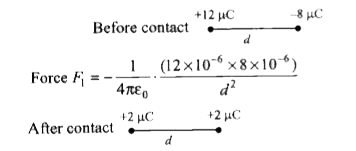 `thereforeF_(2)=+(1)/(4piepsilon_(0))*((2xx10^(-6)xx2xx10^(-6)))/(d^(2))THEREFORE(F_(1))/(F_(2))=(96)/(4)=(24)/(1)` |
|
| 23. |
Two point charges 10 muC and -10 muC are separated by a distance of 40 cm in air. Calculate the electrostatic potential energy of the system, assuming the zero of the potential energy to be at infinity. |
|
Answer» Solution :Here `q_1 = + 10 MUC=10 xx 10^(-6)C, q_2 = 10 muC= - 10 xx 10^(6) C and R = 40 cm= 0.4 m` `:.` POTENTIAL energy of the system `u = (q_1 q_2)/(4pi epsi_0r) = (9 xx 10^9 xx (10 xx 10^(-6)) xx (-10 xx 10^(-6)))/0.4 = -2.25 J`. |
|
| 24. |
A metallic coil of N turns of radius resistance R, and inductance L is held fixed with its axis along a spatial uniform magnetic field bar(B) whose magnitude is given by B_(0) sin(omegat). Write the equation for the current i in the coil. (b) Assuming that in the steady state oscillates with the same frequency as the magnetic field, obtain the expression for i. (c )Obtain the force per unit length. Further obtain its oscillatory part and the time-averaged compressional part. (d) Calculate the time-averaged compressional force per unit length given that B_(0)=1.00"tesla", N=10 a=10cm, omega=1000.0 rad s^(-1), R=10.0Omega, L-100,0mH. |
|
Answer» Solution :`(a)iR+L(DI)/(DT)=-Npia^(2)B_(0)omegacos omegat` `(B)i=(Npi a^(2)B_(0)omega (R cos omegat+omegaL sin omegat))/(R^(2)+omega^(2)L^(2))` `(c)(dF)/(dt)=-(NB_(0)pia^(2)omega)^(2)/(R^(2)omega^(2)L^(2))(R sin omegat cos omegat+omegaL sin^(2)omegat)` `(dF)/(DL)|_(osc)=-(NB_(0)^(2)pia^2omega^(2)L)/(2(R^(2)+omega^(2)L^(2)))` `(dF)/(dl)|_(osc)=-(NB_(0)^(2)pia^2omega^(2))/(2(R^(2)+omega^(2)L^(2)))=(R sin 2 omegat-omegaL cos 2 omegat)` `(dF)/(dl)|_(osc)=1.55N.m^(-1)` |
|
| 25. |
(a) Derive an expression for the potential energy of an electric dipole in a uniform electric field. Explain conditions for stab le and unstable equilibrium. (b) Is the electrostatic potential necessarily zero at a point where the electric field is zero ? Give an example to support your answer. |
|
Answer» Solution :(a) Let an electric, dipole of dipole moment `vecP` be PLACED in an electric FIELD `vecE` making an ANGLE `theta` with the direction of electric field intensity `vecE`. The torque acting on the dipole is given by : `vectau=vecPxxvecE` `tau=PE sin theta` work done to rotate the dipole through an angle `dtheta` `d omega=tau d theta= PE sin theta d theta` work done to rotate the dipole from `theta_(1)" to "theta_(2)` W=int_(theta_(1))^(theta_(2))PE sin theta d theta=PE[-cos theta]_(theta_(1))^(theta_(2))=-PE(cos theta_(2)-cos theta_(1))` `"If "theta_(1)=90^(@) and theta_(2)=theta""U=-PE cos theta =vecP.vecE` for stable equilibrium `theta=0^(@) rArr tau = 0 rArr U=-PE` for unstable equilibrium `theta=180^(@)rArr tau =0 rArr U = + PE.` (b) No. For EXAMPLE : Let we have TWO positive charges of same magnitude are placed at point A and B respectively. Electric field at mid pint O is zero but the electrostatic potential is `V=(1)/(4pi in_(0))(q)/(r)xx2` `V=(1)/(4pi in_(0))(2q)/(r).` 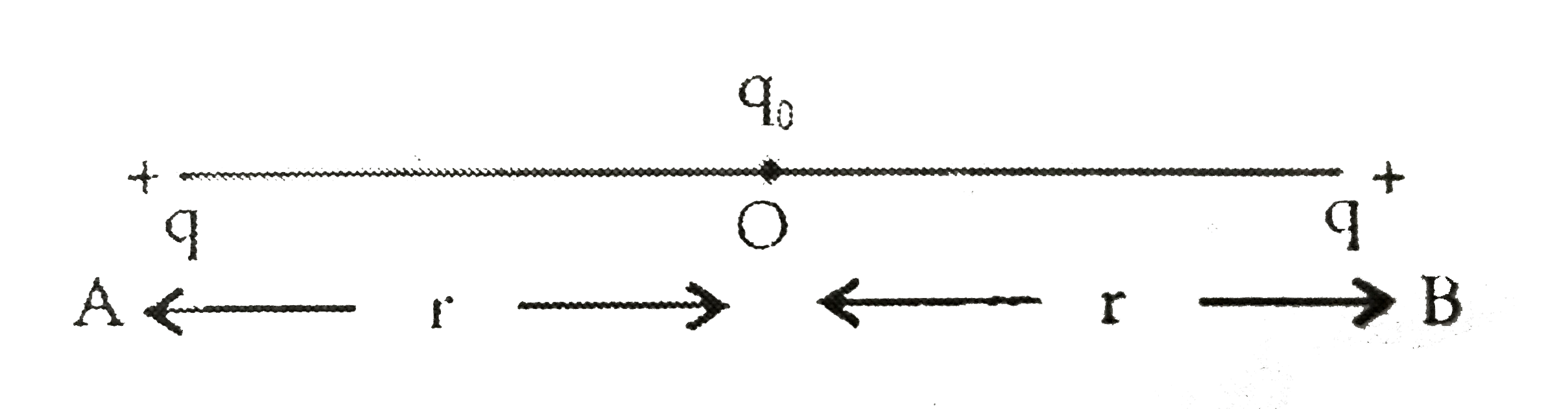
|
|
| 26. |
Most of energy released in the fission is carried by |
|
Answer» NEUTRONS |
|
| 27. |
About 5% of the power of a 100 W light bulb is converted to visible radiation. What is the average intensity of visible radiation :at a distance of 1m from the bulb ? |
|
Answer» <P> SOLUTION :Here, power of RADIATION = 5% of ELECTRICAL power`=100xx(5)/(100)` `THEREFORE P=5W` According to formula, `I=(P)/(A)` `therefore I=(P)/(4pi r^(2))` `therefore I=(5)/(4xx3.14xx(1)^(2)) ""(because r=1m)` `therefore I=0.3981 Wm^(-2)~~ 0.4 Wm^(-2)` |
|
| 28. |
The graph given below depict the dependence of two reactive impedances X_(1) and X_(2) on the frequency of the alternating emf applied individually to them. Then we can say that : |
|
Answer» `X_(1)` is an INDUCTOR and `X_(2)` is a CAPACITOR FREUENCY |
|
| 29. |
About 5% of the power of a 100 W light bulb is converted to visible radiation. What is the average intensity of visible radiation :at a distance of 10 m ? Assume that the radiation is emitted isotropically and neglect reflection. |
|
Answer» <P> SOLUTION :Here, power of radiation = 5% of ELECTRICAL power`=100xx(5)/(100)` `therefore P=5W` Again, according to formula, `I=(P)/(4pi r^(2))` `=(5)/(4xx3.14xx(10)^(2))(because r =10 m)` `therefore I=3.981xx10^(-3)Wm^(-2)~~0.004 Wm^(-2)` |
|
| 30. |
Calculate the focal length of a reading glass of a person if his distance of distinct vision is 75 cm. |
|
Answer» 100.4cm `(1)/(F) = (1)/(u) + (1)/((-v)) = (1)/(25) + (1)/(-75) = (2)/(75) rArr f= (75)/(2)` we get f= 37.5cm |
|
| 31. |
Figure 9.34 shows an equiconvex lens (of refractive index 1.50) in contact with a liquid layer on top of a plane mirror. A small needle with its tip on the principal axis is moved along the axis until its inverted image is found at the position of the needle. The distance of the needle from the lens is measured to be 45.0cm. The liquid is removed and the experiment is repeated. The new distance is measured to be 30.0cm. What is the refractive index of the liquid? |
| Answer» SOLUTION :`n=1.33` | |
| 32. |
A radionuclide with half life T is produced in a reactor ar a constant rate P nuclei per second. During each decay, energy E_(0) is releaxsed. If production of radionuclide is started at t=0 The number of nuclei in the radionuclide at time .t.is |
|
Answer» `N=(PT)/(log_(e)2)[1-e^(-((log_(e)2)/(t))t)]` |
|
| 33. |
A ring of radius R and linear charge density lambda on its surface is performing rotational motion about an axis perpendicular to its plane. lf the angular velocity of the ring is omega, how much current is constituted by the ring? |
|
Answer» R`omega lambda` Linear charge density of electric charge COLLECTED on RING= `lambda` `therefore ` Total charge on ring (Q) =`lambda L = lambda (2 pi R)` As ring rotates at the angular speed ro, let electric CURRENT due to it = I. ` I = (Q)/(l) = (Q)/(T)= (2 pi R lambda)/(T) = (2 pi R lambda)/((2 pi )/(omega))"" (because omega = (2pi)/(T))` I =R `omegalambda ` |
|
| 34. |
The final image formed by the compound microscope is _____and _____. |
| Answer» SOLUTION :MAGNIFIED,INVERTED | |
| 35. |
A radionuclide with half life T is produced in a reactor ar a constant rate P nuclei per second. During each decay, energy E_(0) is releaxsed. If production of radionuclide is started at t=0 The rate of release of energy as a function of time is |
|
Answer» `PE_(0)(1-e^-((log_(e)4)/(T))t)` |
|
| 36. |
Calculate the de Broglie wavelength of a neutron of energy 0.022 eVm = 1.67 xx 10^(-27) kg. |
|
Answer» SOLUTION :GIVEN `MV^2=0.022eV=0.022xx1.6xx10^-19J` `m^2v^2=2mxx0.022xx1.6xx10^-19` `mv=SQRT(2xxmxx0.022xx1.6xx10^-19` `lambda=lambda/(mv)=(6.62xx10^-34)/sqrt(2xx1.67xx10^-27xx0.022xx1.6xx10^-19)=1.93xx10^-10m` |
|
| 37. |
What is the effect of temperature on a transistor. |
| Answer» SOLUTION :With increase in TEMPERATURE the leakage current, which is the current due to the minority CARRIERS will increase. Hence the collector current will also be INCREASED. We can show-that `I_c=betaI_B+(chi+1)I_"leak".I_leak` is me lemcage current due to the minority earners wmeh increases RAPIDLY with increase in temperature. If temperature is constant, then `I_c` will depend on `I_B`. But if temperature is increased men `I_c` is controlled `I_leak` and not by `I_B`. | |
| 38. |
A vernier calipers has 1 mm marks on the main scale. It has 20 equal divisions on the vernier scale which match with 16 main scale divisions. For the vernier calipers, the least count is : |
|
Answer» `0.02` MM `:.1 VSD=(16//20)MSD=(4//5)MSD` `LC=[1MSD-1VSD]=(1//5)=0.2mm` Hence CORRECT choice is `(b)`. |
|
| 39. |
(A) : The radiation pressure on the Earth due to the Sun does not affect the orbital motion of the Earth. (R) : The radiation pressure on the Earth due to sun is exceedingly small. |
|
Answer» Both 'A' and 'R' are TRUE and 'R' is the CORRECT EXPLANATION of 'A'. |
|
| 40. |
Equal mass of the helium and oxygen gases are given equal quantities of heat. Which gas will undergo a greater temperature rise? |
| Answer» Solution :The helium gas will undergo a GREATER temperature rise. The reason is as follows: helium is a monatomic gas while oxygen is a diatomic gas. .The heat given to helium will be totally used up in INCREASING the translational KINETIC energy of its molecules, where as the heat given to oxygen will be used up in increasing the TRANSLATION kinetic energy of the molecules as well as in increasing the , kinetic energy of RATATION and vibration | |
| 41. |
What should be the size of a plane mirror so that a man can see his full image ? |
| Answer» SOLUTION :HALF the SIZE of MAN | |
| 42. |
What is displacement current ? |
| Answer» Solution :It is that current which comes into existence (in addition to conduction current) WHENEVER the ELECTRIC field and HENCE the electric flux changes with time. `I_D=epsilon (dphi_E)/DT = epsilonEA (DE)/dt` | |
| 43. |
A : Young.s double slit experiment can be performed using a source of white light. R : The wavelength of red light is less than the wavelength of other colours in white light. |
|
Answer» Both A and R are true and R is the correct EXPLANATION of A |
|
| 44. |
What are the forms of energy into which the electrical energy of the atmosphere is dissipated during a lightning ? |
| Answer» Solution :The electrical energy of the ATMOSPHERE during a lightning is dissipated in the form of light energy involved in lightning and HEAT and SOUND energy in the ACCOMPANYING THUNDER. | |
| 45. |
In Fig i_(1) = 10e^(-2t) A, i_(2) = 4 A, and V_(C) = 3e^(-2t) V. the vartiation of potential difference across A and C(V_(AC)) with time can be respresented as |
|
Answer»
`Q = CV_(C) = (2)(3e^(-2t)) = 6e^(-2t) A` Current, `i_(C) = (dq)/(dt) = - 12e^(-2t)A` This current flows from `B` to `O`. From `KVL`, we have `i_(L) = i_(1) + i_(2) + i_(C) = 10e^(-2t) + 4 - 12e^(-2t)` `= (4 - 2t^(-2t)) A = [2 + 2(1 - e^(-2t))]A` `i_(L) vs`. time graph is as shows in Fig lt `i_(L)` increases from `2 A` to `4 A` expontially. 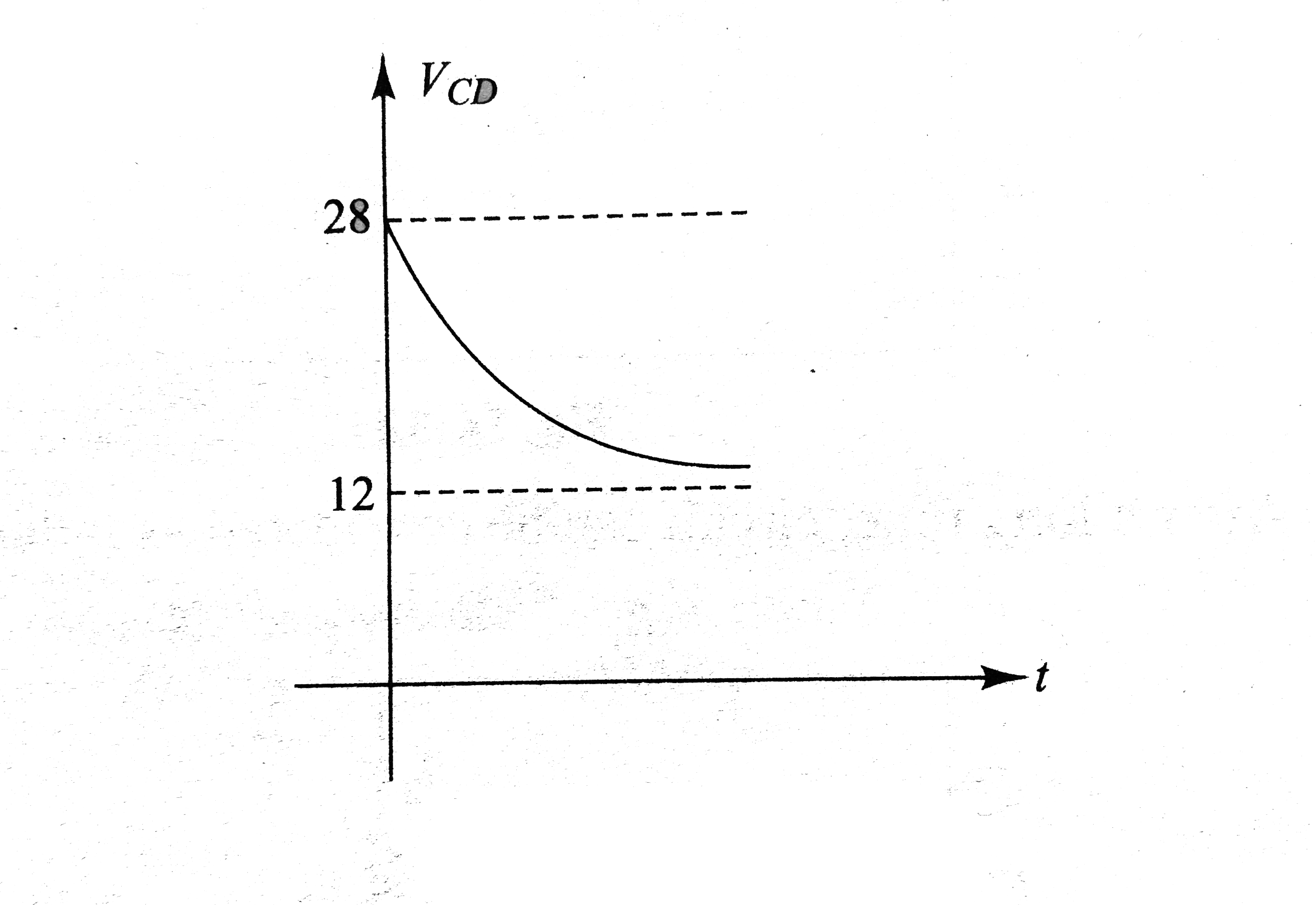 `V_(L) = L(di_(L))/(dt)` `= (4)(d)/(dt) (4 - 2e^(-2t)) = 16e^(-2t) V` `V_(L)` decreases exponentially from `16 A` to `0` as shows in Fig To determine `V_(AC)`, we BEGIN from `A` and at `C`. From `KVL`, we have 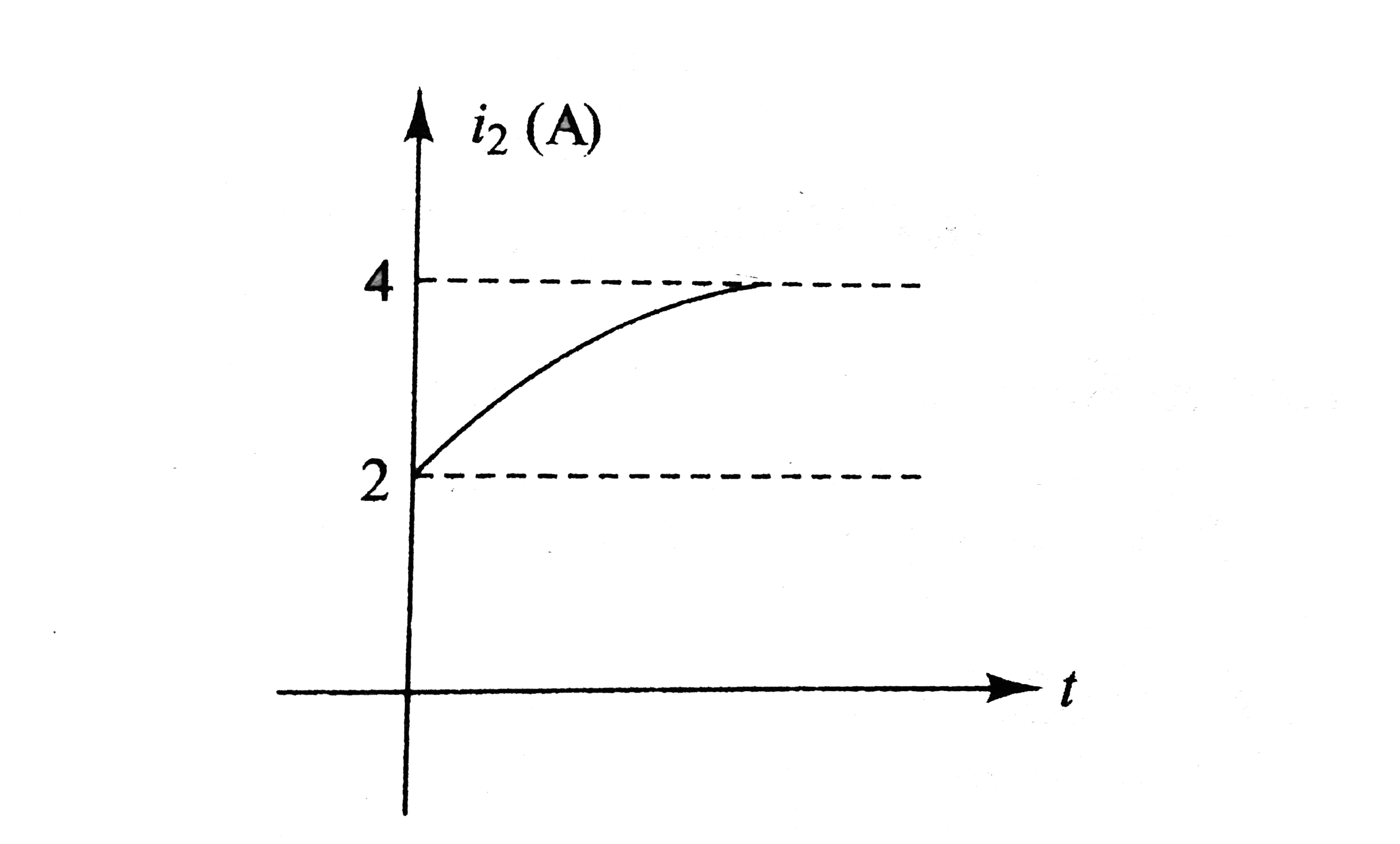 `V_(A) - i_(1)R_(1) + i_(2)R_(2) = V_(C)` `V_(A) - V_(C) = i_(1)R_(1) - i_(2)R_(2)` Substituting the values, we have `V_(AC) = (10 e^(-2t))(2) - (4)(3)` 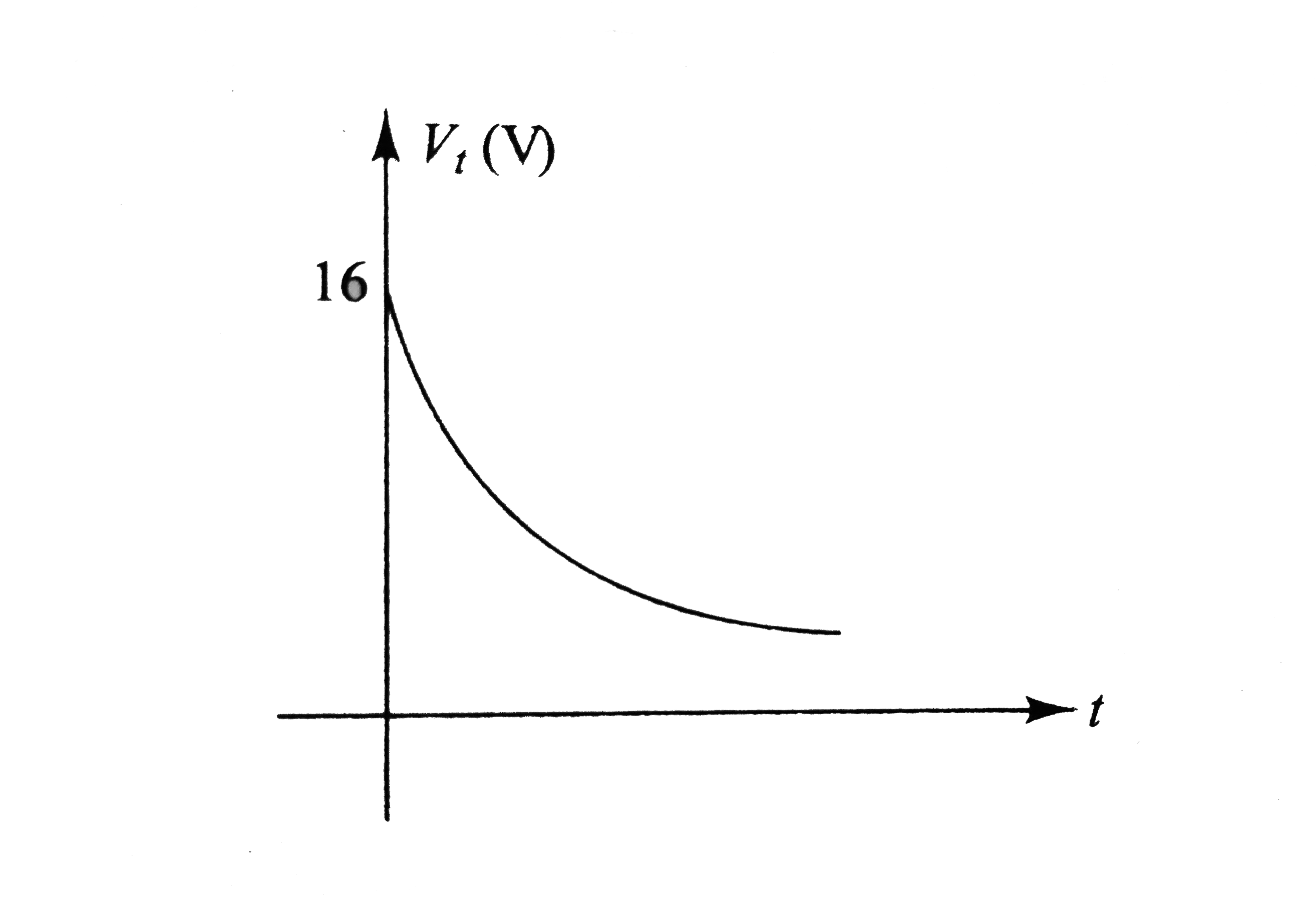 `V_(AC) = (20e^(-2t) - 12) V` At `t = 0`, `V_(AC) = 8V` At `t = oo`, `V_(AC) = - 12 V` Therefore, `V_(AC)` DECREASE exponentially from `8 V` to `12 V`. Similarly, we have from `A` to `B` `V_(A) - i_(1)R_(1) + V_(C) = V_(B)` `V_(AB) = V_(A) - V_(B) = i_(1)R_(1) - V_(C)` 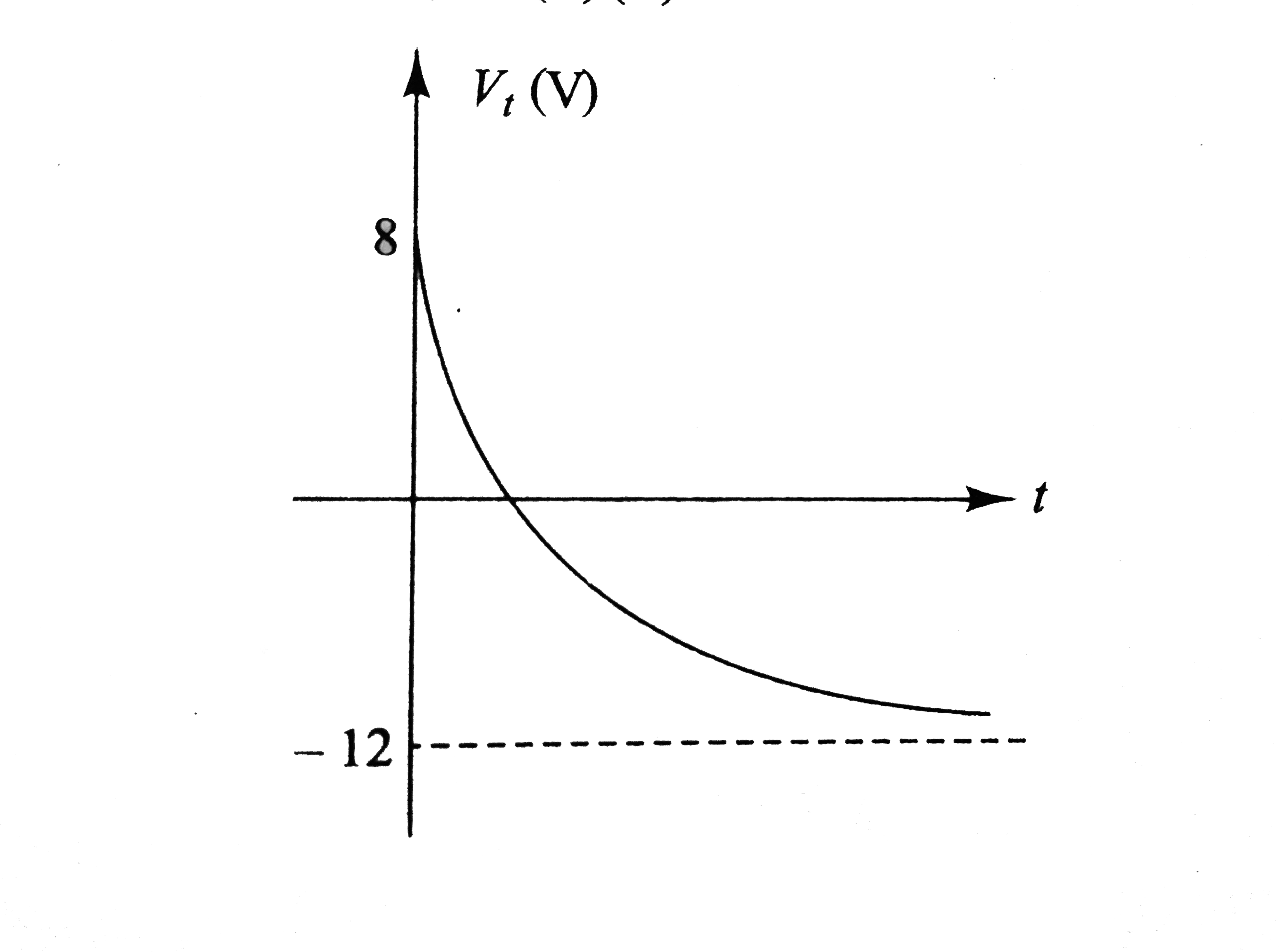 Substituting the values, we have `V_(AB)=^((10e^(-2t)))(2)-3e^(-2t)` `V_(AB) =^(17e^(-2t))V` Thus, `V_(AB)` decreases exponentially from `17 V` to `0`. As we move from `C` to `D`, `V_(C) - i_(2)R_(2) - V_(L) = V_(D)` `V_(CD)= V_(C) - V_(D) = i_(2)R_(2) + V_(L)` Substituting the values we have, `V_(CD)= (4)(3) + 16e^(-2t)` 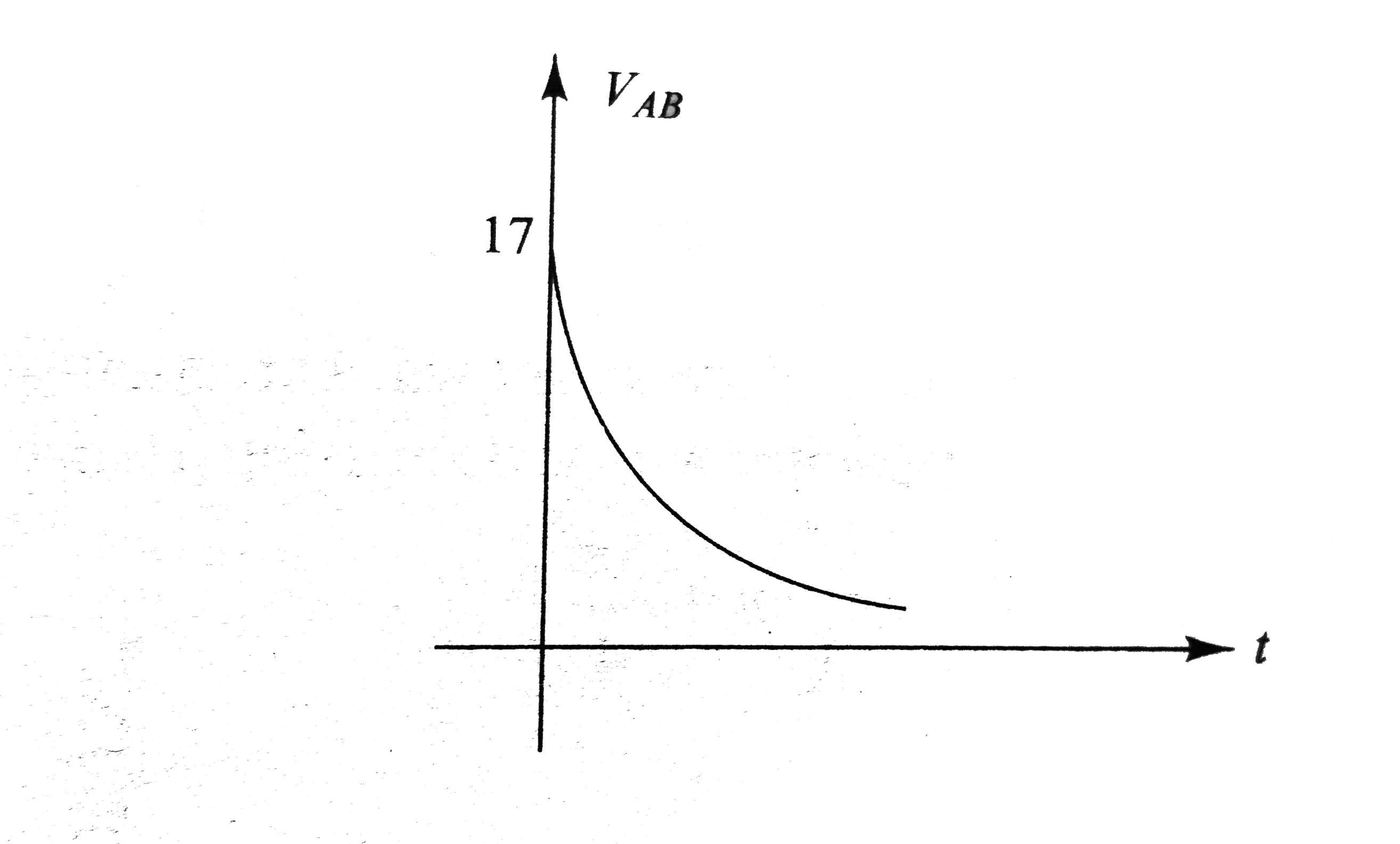 `V_(AD) = (12 + 16e^(-2t))V` At `t = 0, V_(CD) = 28 V` and at `t = oo, V_(CD) = 12 V` i.e., `V_(CD)` decreases exponentially from `28 V` to `12 V`. |
|
| 46. |
The figure shows a smooth inclined plane of inclination theta fixed in a car. A sphere is set in pure rolling on the incline. For what value of the acceleration of the car in the horizontal direction the sphere will continue pure rolling? |
| Answer» Answer :D | |
| 47. |
A flat mirror revolves at a constant angular velocity making n=0.4 revolutions per second. With what velocity ("in m s"^(-1)) will a light spot move along a spherical screen with a radius of 15 m, if the mirror is at the centre of curvature of the screen ? |
|
Answer» 37.7 |
|
| 48. |
When the radius of a soap bubble is inreased from 1/sqrtpi in to 2/sqrtpicm, the work done is720 erg. Find the surface tension of the soap solution. |
|
Answer» SOLUTION :`w = 2 XX T [4piR_2^2 - 4piR_1^2]` `720 = 2T[4pi xx 4/pi - 4pi xx 1/pi`] `therefore 720 = 2T xx 12` `thereforeT = 30` dyne/cm |
|
| 49. |
Explain briefly, the action of a transistor as a switch. |
|
Answer» Solution :i. the transistro is MADE to function in the cutt-off region and in the saturation region ii. In the above circuit, `V_("BB") = V_(i) = I_(B) R_(B) + V_(CE) = V_("CC") - I_(C)R_(C) = V_(0)` iii.The transistor will be in the cut-off region as long as the INPUT voltage is LESS than the `V_("BE")` = 0.65V for silicon and 0.25 V for germanium. The transistor acts as an open switch `V_(B) = V_("CC")` iv. For a transistor operated at saturated region, `V_("CE") ~~ V_(CE) ~~ 0.`the transistor acts as a closed switch. 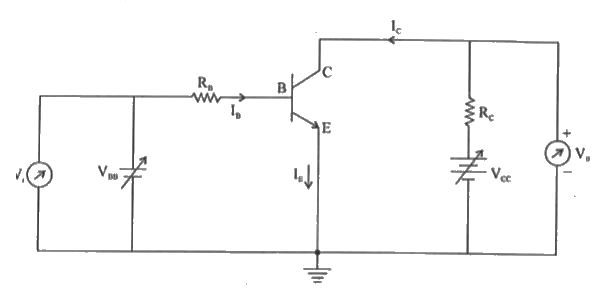
|
|