Saved Bookmarks
This section includes 7 InterviewSolutions, each offering curated multiple-choice questions to sharpen your Current Affairs knowledge and support exam preparation. Choose a topic below to get started.
| 1. |
For which of the following gaseous mixtures, Dalton's law of partial pressure is not applicable- |
|
Answer» `SO_(2),He,NE` |
|
| 2. |
For which of the following elements, the standard enthalpy is not zero? |
|
Answer» C (DIAMOND) |
|
| 3. |
For which of the following compounds will Lassaigne's test for nitrogen fail ? |
|
Answer» `NH_(2)CONH_(2)` |
|
| 4. |
For which of the following compounds theLassaigne's test of nitrogen will fail? |
|
Answer» ` H_(2)NCONH_(2)` |
|
| 5. |
For which of the following compound,the Lassaigne's test for N will fail ? |
|
Answer» `NH_2 CONH NH_2 HCI` |
|
| 6. |
For which of the following cases DeltaS = (DeltaH)/T |
|
Answer» A PROCESS for which `DeltaC_p =0` but `DeltaC_v = 0` |
|
| 8. |
For which hybridization, there are two unequal bond angles |
|
Answer» `sp^3` |
|
| 9. |
For which compound are the empirical and molecualr formular the same? |
|
Answer» `C_(6)H_(5)COOH` |
|
| 10. |
For which crystal anion-anion contact is valid ? |
|
Answer» NaF |
|
| 11. |
For what purpose are the black diamonds used ? |
| Answer» SOLUTION :`For CUTTING glass and for making ROCK DRILLS | |
| 12. |
For weak acid (alphais very small) |
|
Answer» `K_a = C. alpha ^(@) ` |
|
| 13. |
For vaporization of water at 1 atmospheric pressure, the values of Delta H and Delta S are 40.63 KJ/mol""^(1) and 108.8 JK^(-1)/mol^(-1), respectively. The temperature when Gibbs energy change(Delta G) for this transformation will be zero, is : |
|
Answer» 293.4 K `Delta H = 40630 "J mol"^(-1)` `Delta S = 108.8 "JK mol"^(-1)` `Delta G = Delta H - T Delta S`. (When `Delta G = 0, Delta H - T Delta S= 0`) `T= (Delta H)/( Delta S)= (40630 "J mol"^(-1) )/( 108.8 "J mol"^(-1) )` `= 373.4` K `THEREFORE` Correct answer is (D) |
|
| 14. |
For types of reaction mechanism…. (i) reaction of propene with HBr in presence of peroxide is not a type of free radical addition reaction. (ii) chlorination of methane in presence of sunlight is a kind of free radical substitution reaction. (iv) dehydration of propanol is a kinf of beta-elemination reaction. |
|
Answer» |
|
| 15. |
For two ionic solids CaOand KI , identify the wrong statement among the following ? |
|
Answer» LATTICE energy of CaO is much HIGHER than that of KI |
|
| 16. |
For two gases A and B with molecular masses M_(A) and M_(B), it is observed that at a certain temperature T, the mean velocity of A is equal to the root mean square velocity of B. What should be done to the temperature of A so that its mean velocity becomes equal to the mean velocity of B at temperature T ? |
|
Answer» Solution :`BAR(c_(A))=sqrt((8RT)/(piM_(A))),"" c_(B)=sqrt((3RT)/(M_(B)))` GIVEN`bar(c_(A))=c_(B)`.HENCE,`(8RT)/(piM_(A))=(3RT)/(M_(B))"or"(M_(A))/(M_(B))=(8)/(3pi)` Now, if B at TEMPERATURE T and A is at T', then `bar(c_(A))=bar(c_(B))""` (Required CONDITION) `:. "" sqrt((8RT')/(piM_(A)))=sqrt((8RT)/(piM_(B)))"or"(T')/(M_(A))=(T)/(M_(B))"or"(T')/(T)=(M_(A))/(M_(B))=(8)/(3pi)` or`T'=(8)/(3pi)xxT`. As`(8)/(3pi)lt1,T'ltT`. Hence, temperature of B should be lowered to `(8)/(3pi)` or 0.85 of temperature T. |
|
| 17. |
For two gases A and B with molecular weights M_A and M_B, it is observed that at a certain temperature T, the mean velocity of A is equal to the root mean square velocity of B. Thus the mean velocity of A can be made equal to the mean velocity of B if |
|
Answer» A is increased to a temperature `T_2 = (3 PI)/8 T` `implies sqrt((8RT)/(pi M_A)) = sqrt((3RT)/(M_B)) implies 8/(pi M_A) = 3/(M_B) ` Case (i) changing T of A `(barC_A) = (barC)_B implies sqrt((8RT)/(pi M_A)) = sqrt((8RT_2)/(pi M_B))` `implies (T)/(M_A) = (T_2)/(M_B) implies T_2 = (M_B)/(M_A) T implies T_2 = (3pi)/(8) T > T.` |
|
| 18. |
For two-dimensional hexagonal lattice, thee unit cell is _______ |
|
Answer» |
|
| 20. |
For tow ionic solids CaO and KI, identify the wrong statement among the following ? |
|
Answer» Lattice energy of CaO is much higher than that of KI |
|
| 21. |
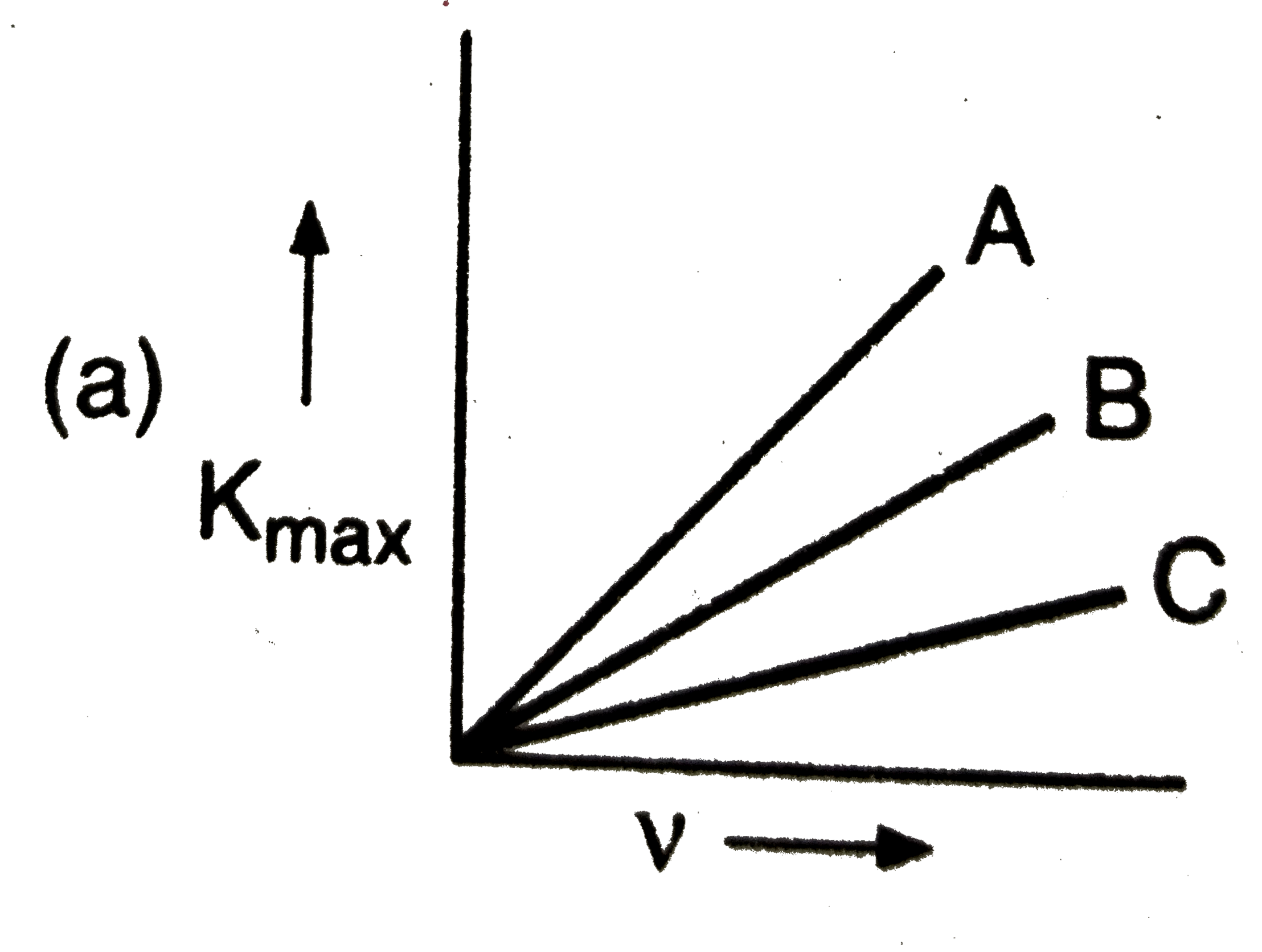
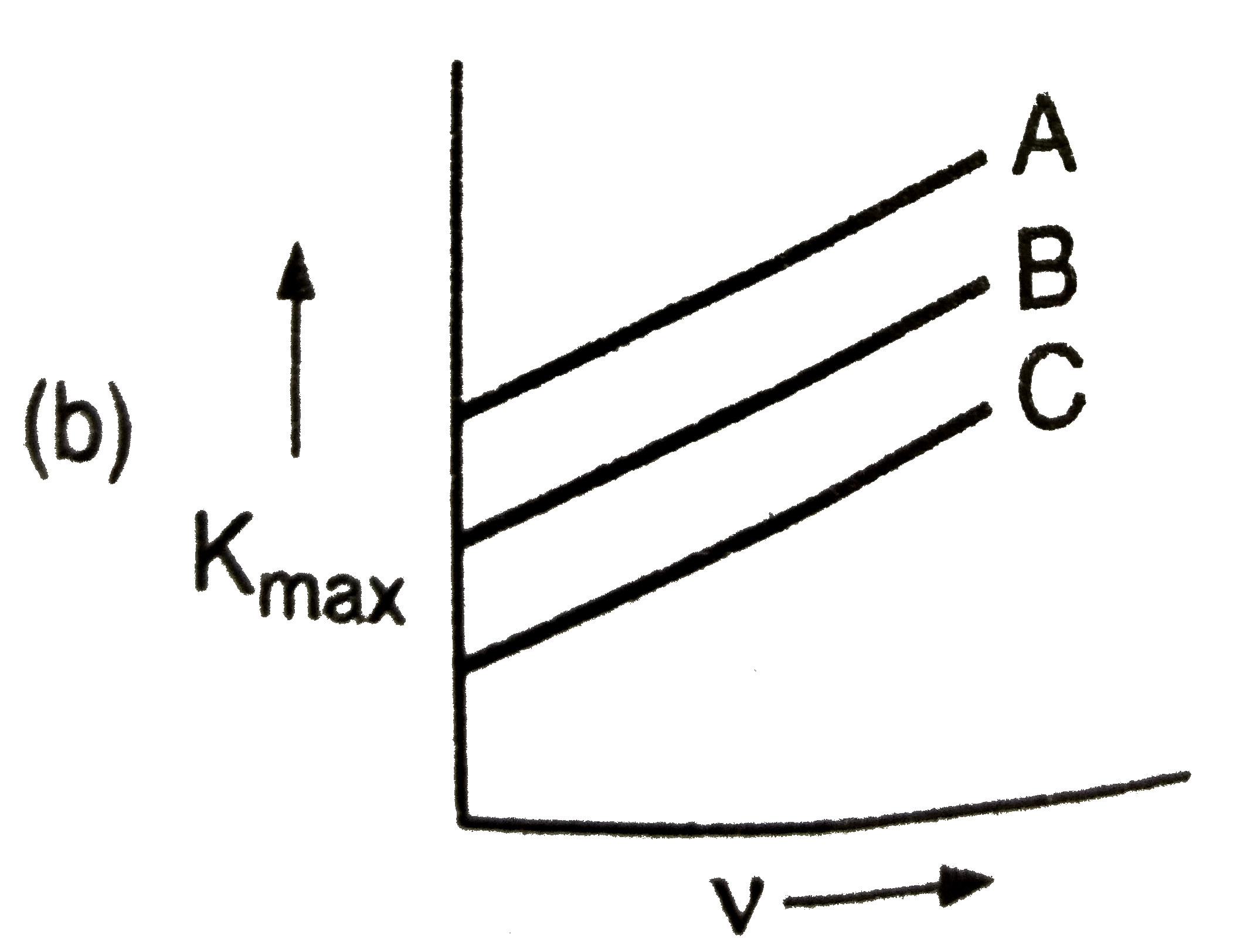
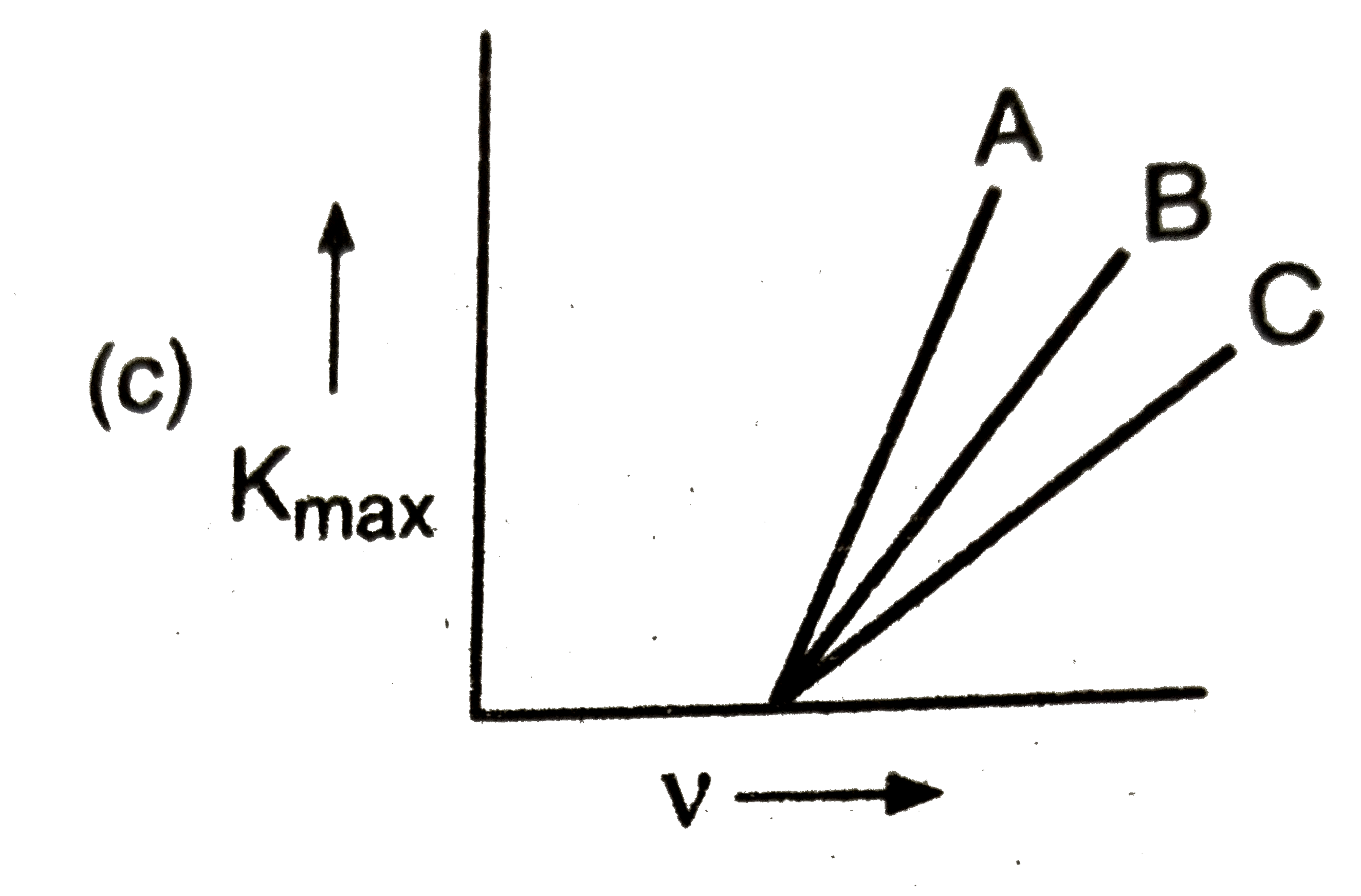
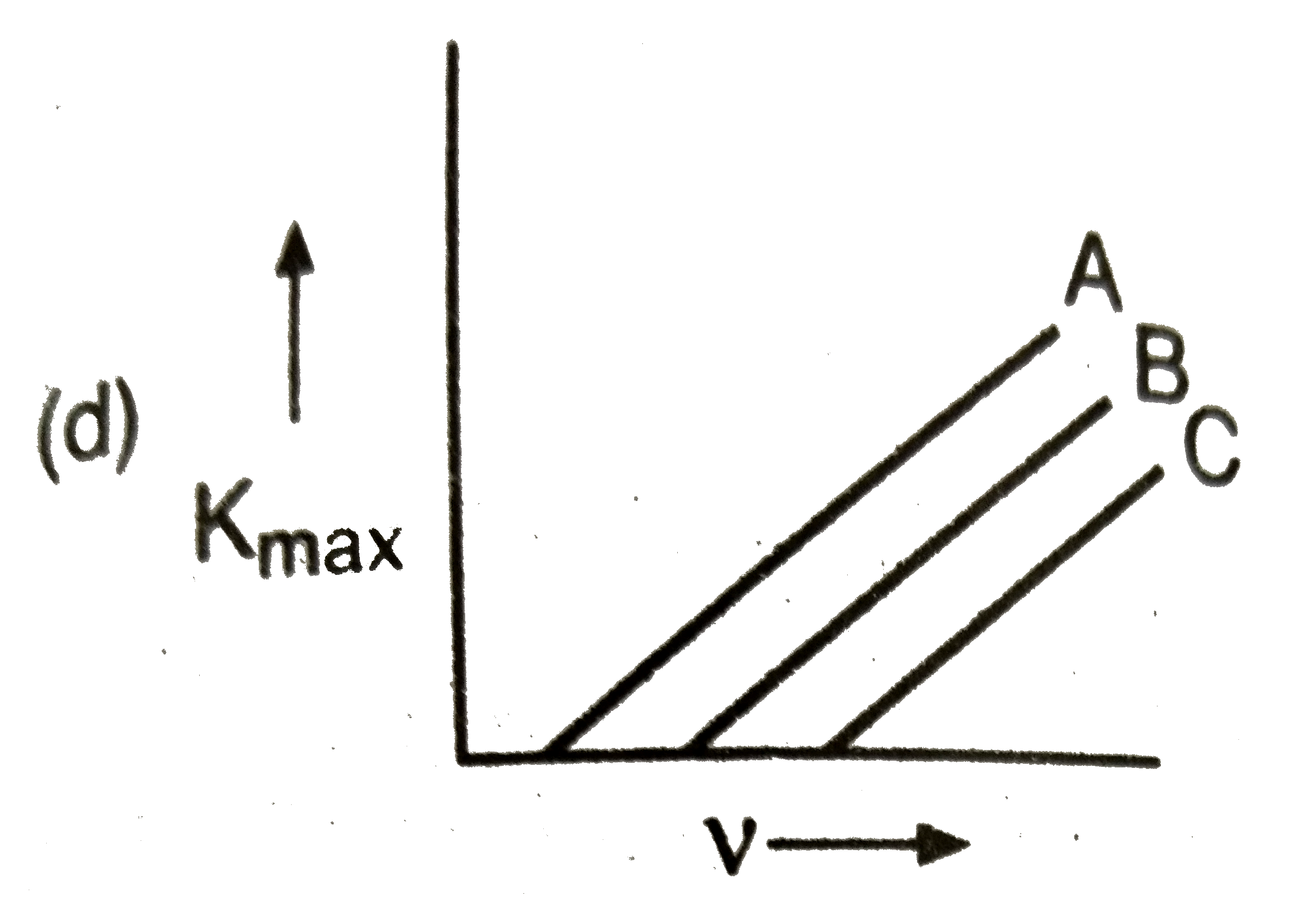
For three different metals A,B,C photoemission is observed one by one. The graph of maximum kinetic energy versus frequency f incident radiation are sketched as: |
|
Answer»
|
|
| 22. |
For this process (overall change) which is correct |
|
Answer» q= 0, W= 0 Clockwise `rArr W_("on") = -Ve rArr q = +ve` |
|
| 23. |
For the transition C_(("diamonid")) rarr C_(("graphite")) , Delta H = -1.5KJ. It follows that |
|
Answer» GRAPHITE is stabler than DIAMOND |
|
| 24. |
For the third electron of Lithium atom moving in its premissible orbit, the values of angular momentum and energy are...... Respectively |
|
Answer» Angular momentum `(h)/(2PI)` energy `=(-9pi^(2)E^(4)m)/(2h^(2)` third ELECTRON of Li means `2s^(1)` `therefore` angular momentum quantum no = l =0 angularmomentum of electron in any orbital accordingto bohrequation`E=(2e^(4)pi^(2)z^(2)m)/(n^(2)h^(2))` for third electronof li `1s^(2) 2s^(1)` `=-9/2 (e^(4)pi^(2)m)/(h^(2))` |
|
| 25. |
For the test of halides, the soda extract is acidified with : |
|
Answer» dil. `H_(2)SO_(4)` |
|
| 26. |
For the system 3A+2BhArrC, the expression for equilibrium constant K is |
|
Answer» `([3A]XX[2B])/([C])` |
|
| 27. |
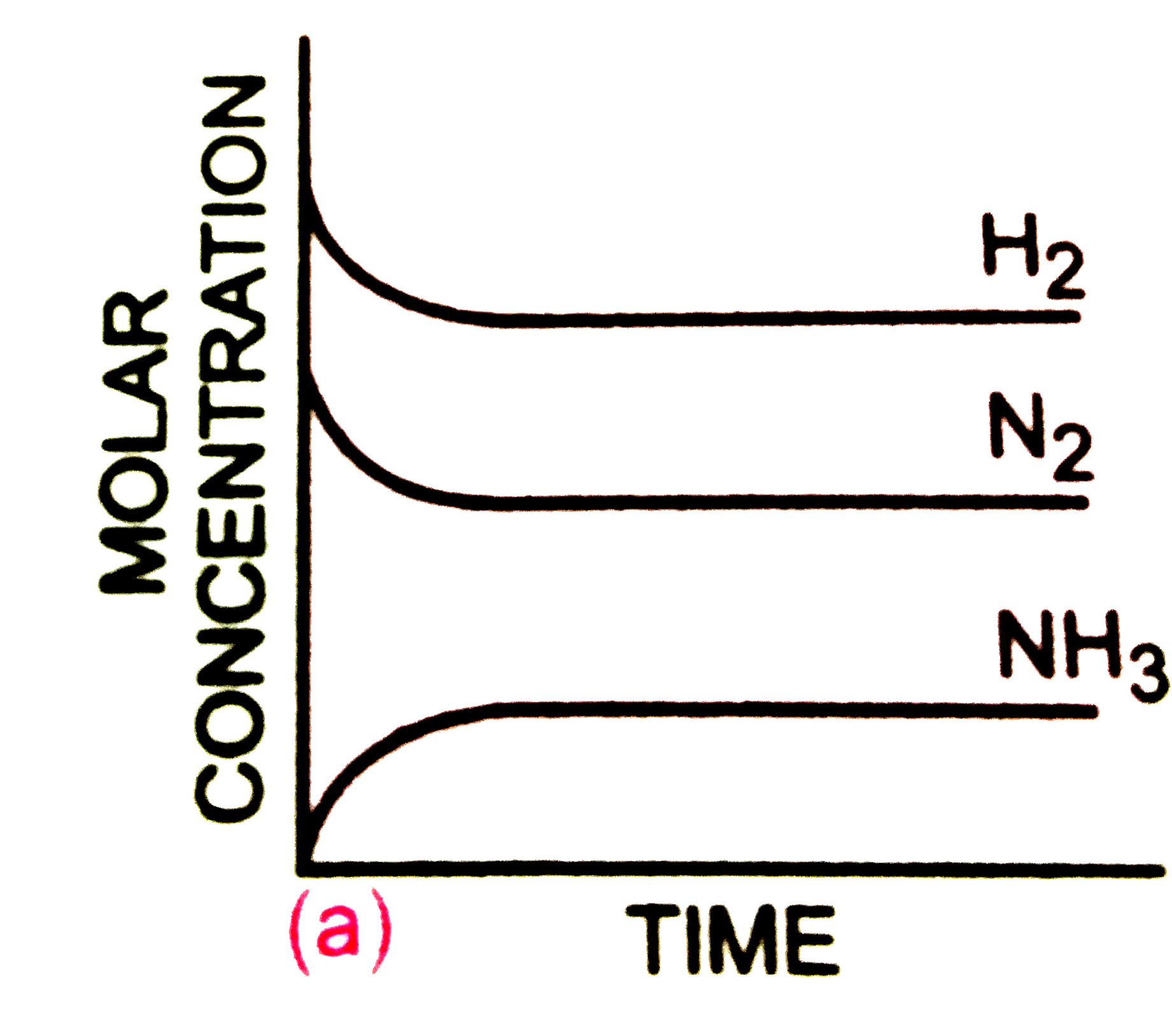
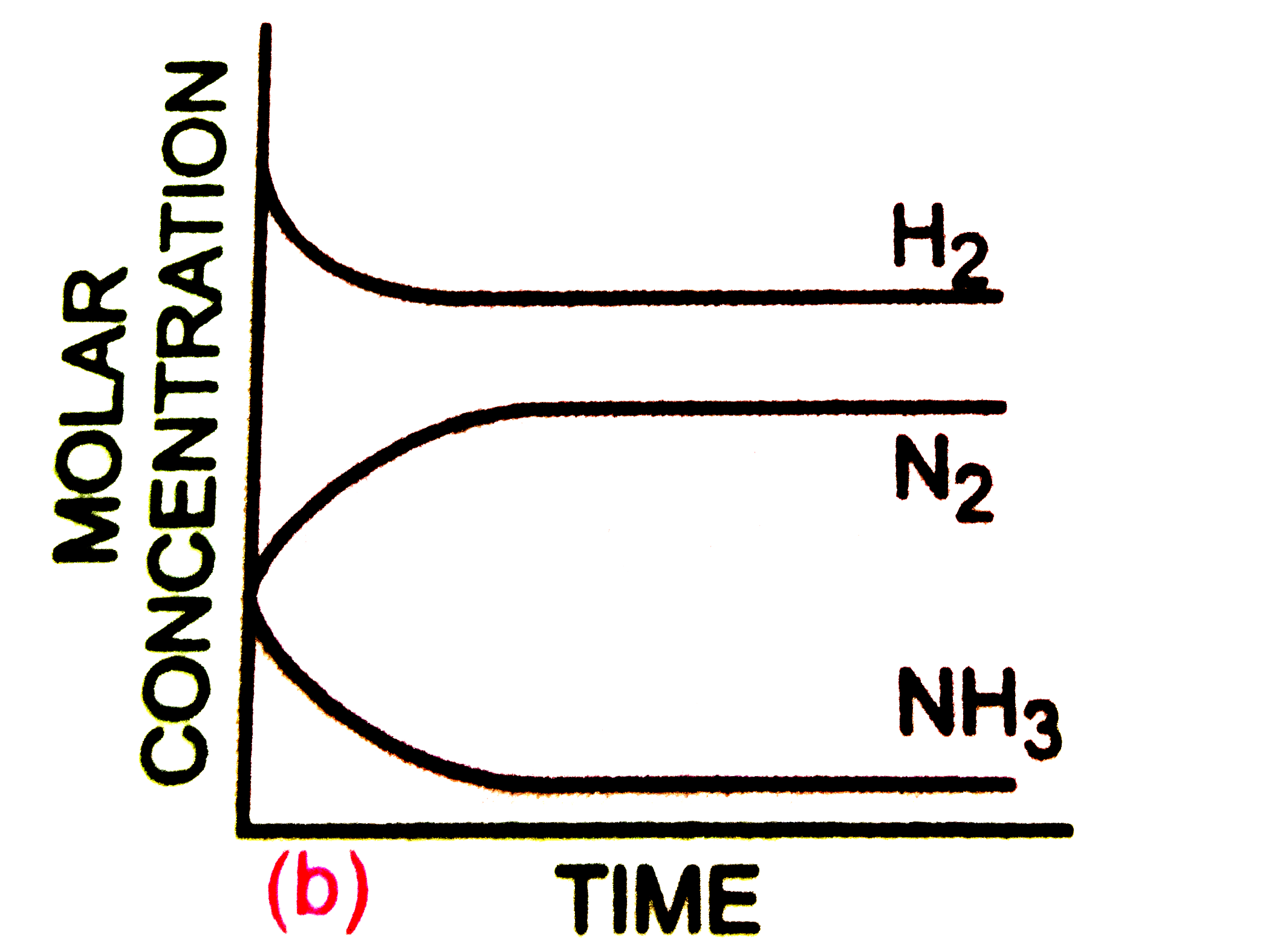
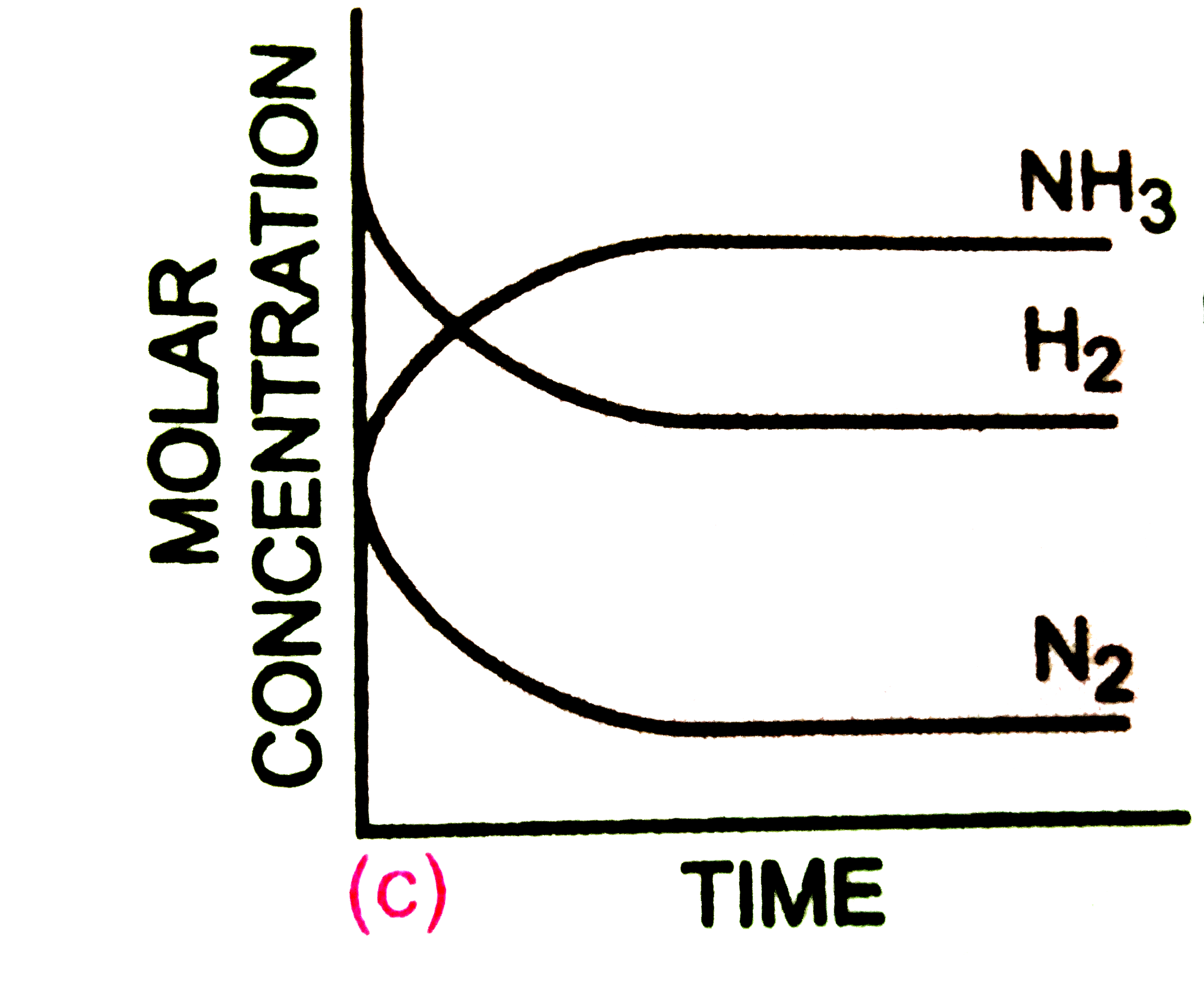
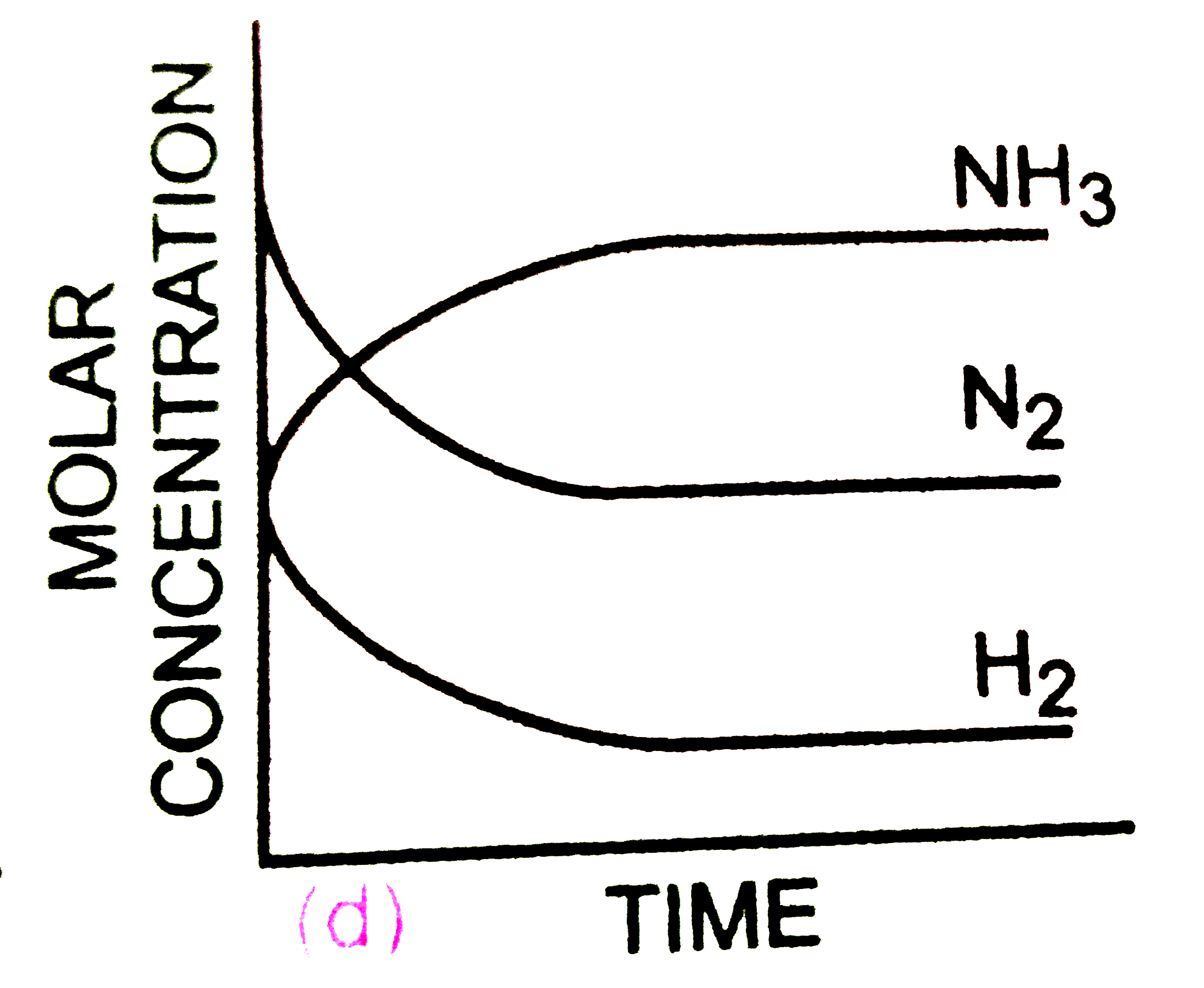
For the synthesis of ammonia by the reaction N_(2) + 3 H_(2) hArr 2 NH_(3)in the Haber's process, the attainment of equilibrium is correctly predicted by the curve |
|
Answer»
|
|
| 28. |
For the study of catalystic reaction who was awarded noble prize |
|
Answer» OSTWALD |
|
| 29. |
For the spontaneous reaction at each temperature .......... . |
|
Answer» `DELTA G -ve, Delta H +ve and Delta S +ve` |
|
| 30. |
For the spontaneous reactions ........... . |
|
Answer» `DELTAH = -ve , DELTA S = +ve` |
|
| 31. |
For the sparingly soluble salts, an equilibrium is established between the undissolved solid unit and ions of the dissolved salt. For a solution of the salt like A_x B_y. A_x B_y =xA^(y+)+yB^(x-) K_(sp)=[A^(y+)]^x [B^(x-)]^y For precipitationto occur , the ionic product must be greater than K_(sp). What is the minimum concentration of OH^- ions required to precipitate Fe(OH)_3 from a 0.001 M solution of FeCl_3 (K_(sp) of Fe(OH)_3 =1xx10^(-36) ) |
|
Answer» `1xx10^(-12)` `[Fe^(3+)]=[FeCl_3]`=0.001 M `[OH^-]^3 =(1xx10^(-36))/0.001 =1xx10^(-33)` `THEREFORE [OH^-]=1xx10^(-11)` |
|
| 32. |
For the same increase in volume,why work done is more if the gas is allowed to expand reversibly at higher temperature? |
| Answer» SOLUTION :For isothermal reversible expansion, `w=-P_("INT") xxDeltaV`. At HIGHER temperature, INTERNAL pressure of the gas is more. | |
| 33. |
For the reversible reaction N_(2(g))+3H_(2(g))hArr2NH_(3(g))+"Heat". The equilibrium shifts in forward direction. |
|
Answer» by INCREASING the concentration of `NH_(3(g))` |
|
| 34. |
For the reversible reaction N_(2)(g) + 3H_(2)(g) hArr2NH_(3)(g) " at " 500^(@) C, the value of Kp is 1.44 xx 10^(-5)" atm"^(-2) . Find the K_(c) value. |
| Answer» SOLUTION :`1.44 XX 10^(-5)//(0.082 xx 773)^(-2) ` | |
| 35. |
For the reversible reaction ,N_(2) (g) + 3 H_(2) (g) hArr 2 NH_(3) (g) " at " 500^(@)C , " the value of " K_(p) " is "1*44 xx 10^(-5)when partial pressure is measured in atmospheres. The corresponding value of K_(c) , with concentration in mole litre^(-1), is |
|
Answer» ` 1*44 xx 10^(-5) //(0* 082 xx 500) ^(-2)` |
|
| 36. |
For the reversible reaction, N_(2) (g) + 3 H_(2) (g) hArr 2 SO_(3) (g) The equilibrium shifts in the forward direction |
|
Answer» by increasing the CONCENTRATION of `NH_(3)` |
|
| 37. |
For the reversible reaction N_(2 (g)) + 3 H_(2 (g)) hArr 2 NH_(3 (g)) at 500^(@) C . The value of K_(p) is 1.44 xx 10^(-5) , when partial pressure is measured in atmosphers . The corresponding value of K_(c) with concentration in mol L^(-1) is |
|
Answer» `1.44 XX 10^(-5) l (0.082 xx 500)^(-2)` |
|
| 38. |
For the redox recation MnO_(4)^(-)+C_(2)O_(4)^(2-)+H^(+)toMn^(2+)+CO_(2)+H_(2)O the correct coefficients of the reactants for the blalanced equation are |
|
Answer» `{:(MnO_(4)^(-),C_(2)O_(4)^(2-),H^(+)),(2,16,5):}` |
|
| 39. |
For the redox reaction : MnO_4^(-) +Fe^(2+) +H^(+) rarr Mn^(2+)+Fe^(3+)+H_2O The correct coefficients of the reactants in the balanced reaction are : |
|
Answer» `{:(MnO_4^(-), FE^(2+),H^+),(1,5,8):}` |
|
| 40. |
For the redox reaction MnO_(4)^(-)+C_(2)O_(4)^(2-)+H^(+)toMn^(2+)+CO_(2)+H_(2)O the correct coefficients of the reactants for the balanced equation are |
|
Answer» `{:(MnO_(4)^(-),C_(2)O_(4)^(2-),H^(+)),("5","16","2"):}`  n = 5 of `MnO_(4)^(-)`, n = 2 of `C_(2)O_(4)^(-2)`, Ration = 5 : 2 So, Balanced equation : `2MnO_(4)^(-)+5C_(2)O_(4)^(2-)+16H^(+)to2Mn^(2+)+10CO_(2)+8H_(2)O` |
|
| 41. |
For the redoxreaction MnO_(4)^(-)+C_(2)O_(4)^(2-)+H^(+)rarrMn^(2+)+CO_(2)+H_(2)O The correct coefficients of the reactants for he balanced equation are MnO_(4)^(-)C_(2)O_(4)^(2-) H^(+) |
|
Answer» 16 5 2 Thus option (B) is correct |
|
| 42. |
For the redox reaction, MnO_(4)^(-)+C_(2)O_(4)^(2-)+H^(+) to Mn^(2+)+CO_(2)+H_(2)O the correct coefficients of the reactants for the balanced reaction are : |
|
Answer» `{:(MnO_(4)^(-),C_(2)O_(4)^(2-),H^(+)),(" "2," "5,16):}` |
|
| 43. |
For the redox reaction, MnO_4^- + C_2 O_4^(2-) + H^+ rarr Mn^(2+) + CO_2 + H_2 O the correct coefficients of the reactants for the balanced reaction are respectively MnO_4^-, C_2 O_4^-, H^+ : |
|
Answer» `{:(MnO_(4)^(-),C_(2)O_(4)^(2-),H^(+)),(2,5,16):}` |
|
| 44. |
For the redox reaction: MnO_(4)^(-)+C_(2)O_(4)^(2-)+H^(+)rarrMn^(2+)+CO_(2)+H_(2)O The correct coefficeents of the reactants for the balanced reaction are: MnO_(4)^(-)C_(2)O_(4)^(2-) H+ |
|
Answer» `2" "5" "16` `2Mn_(4)^(-)+5C_(2)O_(4)^(2-)+16H^(+)rarr2Mn^(2+)+10CO_(2)+8H_(2)O` |
|
| 45. |
For the real gases reaction 2CO_((g)) + O_(2(g)) rarr 2CO_(2(g)), Delta H = - 560kJ. In a 10L rigid vessel at 500K, the initial pressure is 70 bar and after reaction it becomes 40 bar. The change in internal energy is: |
|
Answer» <P>`-557 kJ` |
|
| 46. |
For the reactions N_(2) (g) + 3 H_(2) (g) hArr 2 NH_(3) (g), " at " 400 K, K_(p) = 41." Find thevalue of "K_(p) for each of the followingreactions at the same temperature : (i)2 NH_(3) (g) hArr N_(2) (g) + 3 H_(2) (g)(ii) 1/2 N_(2) (g) + 3/2H_(2) (g) hArr NH_(3) (g)(iii) 2 N_(2) (g) + 6 H_(2) (g) hArr 4 NH_(3) (g) |
|
Answer» Solution :(i) It is the reverse of the GIVEN reaction. Hence , `K_(p) = 1/41` (ii) It is obtained by DIVIDING the given equation by 2. Hence, `K_(p) = sqrt(41)` (iii) It is obtained by MULTIPLYING the given equation by 2. Hence, `K_(p) = (41)^(2)`. |
|
| 47. |
For the reaction,HC_(2)H_(2)ClO_(2)(aq) Leftrightarrow H^(+)+C_(2)H_(2)ClO_(2)^(-)(aq) HCH,C//O (aq) =H+CHCO_2 (aq), the equillibrium constant at 25^(@)C is 1.35xx10^(-3)M. Calculate DeltaG^(@). |
|
Answer» |
|
| 48. |
For the reaction, Zn + Cu^(2) rarr Zn^(2+) + Cuwhich of the following is the CORRECT statement ? |
|
Answer» ZN is REDUCED to `Zn^(2+)` |
|
| 49. |
For the reaction, X_(2)O_(4)(l) to 2XO_(2)(g) DeltaU = 2.1 kcal, DeltaS=20 cal K^(-1) at 300 K hence, DeltaG is |
|
Answer» `2.7` kcal `DeltaH = 2.1 kcal = 2100 cal, DeltaS = 20 cla K^(-1)` `DeltaH = DELTAU + Deltan_(g) RT` `Deltan_(g) = 2-0 = 2 ,R = 2 cal K^(-1) mol^(-1), T = 300 K` `DeltaH = 2100 + (2 xx 2 xx 300) = 3300 cal` `DeltaG = DeltaH-TDeltaS` = `3300 - 300(20) = -2700 cal = -2.7 kcal` |
|
| 50. |
For the reaction X_(2)O_(4)(l) rarr 2XO_(2)(g), DeltaU = 2.1 kcal , DeltaS =20 calK^(-1) at300K.Hence,DeltaGis |
|
Answer» 2.7 kcal Given`:DeltaU =2.1 kcal ,Deltan_(f) = 2-0=2`, `R = 2 xx 10^(-3) kcal, T= 300K` `:. DeltaH =2.1+ 2 xx 2XX 10^(-3) xx 300 = 3.3 kcal` Again, `DeltaG= DeltaH - T DELTAS` Given `: DeltaS =20 xx 10^(-3) kcal K^(-1)` `DeltaH= 3.3 kcal` ( calculateabove) `:. DeltaG = 3.3 - 300 xx (20 xx 10^(-3))` `=3.3-6 = - 2.7 kcal` |
|