Saved Bookmarks
This section includes 7 InterviewSolutions, each offering curated multiple-choice questions to sharpen your Current Affairs knowledge and support exam preparation. Choose a topic below to get started.
| 1. |
An unidentified bivalent metal M reacts with unidentified halogen X to form an unknown compound of halogen gas. When 1.12g of it is heated, 0.72g of MX is obtained along with 56 ml of halogen gas at 1atm and 273 K. Identify the metal. |
|
Answer» Zn |
|
| 2. |
An unbalanced chemical equation is against the law of |
|
Answer» The LAW of GASEOUS volumes |
|
| 3. |
An S_(N)1 reaction at an asymmetric carbon of compound always gives |
|
Answer» an enantiomer of the substance |
|
| 4. |
An queous solution of a substance gives a white precipitate on treating with dilute hydrochloric acid which dissolves on heating. When hydrogen sulphide is passed through the hot solution, a black precipitate is obtained. The substance is : |
|
Answer» `Hg^(2+)` salt `HgO + 2HCl rarr UNDERSET(("White ppt"))(HgCl_(2)) + H_(2)O` `HgCl_(2) + H_(2)S rarr underset(("Black ppt"))(HgS) + 2HCl` |
|
| 5. |
An oxygen containing organic compound was found to contain 53% carbon and 13% hydrogen. Its vapour density is 23. The compound reacts with sodium metal to liberate hydrogen. Identify the functional isomer of this compound. |
|
Answer» Solution :% O = 100 - (53 + 13) = 34 `:.` Ratio of atoms, `C : H : O = (53)/(12) : (13)/(1) : (34)/(16) = 4.4 : 13 : 2.125 = 2 : 6 : 1` `:. E.F. = C_(2)H_(6)O` andE.F. wt `= 2 XX 12 + 6 xx 1 + 1 xx 16 = 46` Mol. wt. `= 2 xx V.D. = 2 xx 23 = 46` `:.` n = Mol. wt/E.F. wt. `= (46)/(46) = 1` Thus, M.F. `= 1 xx E.F. = C_(2)H_(6)O` Since the given organic compound reacts with sodium o liberate `H_(2)` gas, therefore, it must be ethanol. `underset("Ethanol")(2CH_(3)CH_(2)OH)+2Na rarr 2CH_(3)CH_(2)ONa+H_(2)` The functional ISOMER of ethanol is methoxymethane, i.e., `CH_(3)OCH_(3)`. |
|
| 6. |
An oxidising agent is a substance which ......... electrons whereas a reducing agent is the substance which ......... Electrons |
| Answer» SOLUTION :GAINS, LOSES | |
| 7. |
An oxide X in the normal form is almost non-reactive due to very high X - O bond enthalpy. It resists the attack by halogens, hydrogen and most of acids and metals even at elevated temperature. It is only attacked by HF and NaOH. The oxide X is. |
|
Answer» `SiO_(2)` |
|
| 8. |
An oxide which gives H_2O_2on treatment with dilute acid is..... |
|
Answer» `PbO_2` |
|
| 9. |
An oxide of nitrogen contains 36.8% by weight of nitrogen. The formula of the compound is |
|
Answer» `N_(2)O` |
|
| 10. |
An oxide of nitrogen contains 25.9% of nitrogen. What is its empirical formula |
| Answer» SOLUTION :`N_2O_5` | |
| 11. |
An oxide of nitrogen contains 30.43% nitrogen. The molecular mass of the compound is 92 amu. Find the molecular formula of the given oxide. |
|
Answer» |
|
| 12. |
An oxide of metal M has 40% by mass of oxygen. Metal M has relative atomic mass of 24. The empirical formula of the oxide is: |
|
Answer» `M_(2)O` |
|
| 13. |
An oxide of element A was analysed and found to have mass ratio of A to oxygen equal to 7:3. Then formular of oxide can be : [Atomic mass of A = 56] |
|
Answer» `A_(2)O_(2)` |
|
| 14. |
An oxide of manganese contains 2.29g of manganese per gram of oxygen. What is the empirical formular of this compound? |
|
Answer» MnO |
|
| 15. |
An oxide of an element is a gas and dissolves in water to give an acidic solution. The element belongs to |
|
Answer» II GROUP |
|
| 16. |
An oxide of alkaline earth metals X reacts with C and Cl_(2) to give a compound Y. Y is found in polymeric chain structure and is electron deficient molecule. The compound Y is |
|
Answer» BeO `BeCl_(2)` is polymeric and ELECTRON DEFICIENT MOLECULE. |
|
| 17. |
Anoxideof alkalineearthmetal on heatingwithcarbonin thepresence of chlorinegivesBeCl_(2).Theoxideis _________. |
|
Answer» `BEO` |
|
| 18. |
An organometallic compound on analysis gave the following results : C = 64.4 %, H = 5.5 %, Fe = 29.9 %. Determine the empirical formula. |
|
Answer» `{:("Element","Percentage","Atomic MASS","Gram ATOMS (Moles)","Atomic ratio (Molar ratio)","Simplest whole no. ratio"),("C",64.4,12,(64.4)/(12)=5.4,(5.4)/(0.53)=10.2,10),("H",5.5,1,(5.5)/(1)=5.5,(5.5)/(0.53)=10.3,10),("Fe",29.9,56,(29.9)/(56)=0.53,(0.53)/(0.53)=1.0,1):}` Empirical formula of the compound `= C_(10)H_(10)Fe`. |
|
| 19. |
An organic reaction occurs through making and breaking of bonds. The breaking of bonds may occur either homolytically leading to the formation of radicals or heterolytically generating positively and negatively charged species. The neutral species (free radicals, carbenes, nitrenes, etc.) and positively charged species being electron deifcient are collectively called electrophiles while neutral and negatively charged species which are electron rich are called nucleophiles. An organic reaction usually involves the attack of a reagent (radicals, positively and negatively charged species) on the substrate molecule). The substrate molecule, although as a whole electrically neutral, has centres of low and high electron density due to displacement of bonding electrons. These electrons displacements occur through inductive,electromeric occur through inductive, electromeric, resonance and hyperconjugation effects. Whereas inductive effects involve displacement transfer of n-and pi-electrons along a conjugated system. Hypercongation effects, on the other hand, involve sigma-pi-conjugation. Both inductive and hyperconjugation effects can be used to explain the stability of carbocations and free radicals which follow the stability order: 3^(@) gt 2^(@) gt 1^(@). The stability of carbanions, however, follows opposite order. The stability of a molecule can be judged on the basis of contribution of its resonance structures. Resonance structures have same position of nuclei and have same number of unpaired electrons. Among resonance structures, the one which has greater number of covalent bonds, has less separation of opposite Charges, a negative charge on more electronegative and a positive charge on a more electropostive atom are more stable than others. For 1-methoxy-1, 3-butadiene, which of the following resonating structure is the least stable ? |
|
Answer» `H_(2)overset(-)(C)-overset(+)(C)H-CH=CH-O-CH_(3)` |
|
| 20. |
An organic substance from its aqueous solution can be separated by |
|
Answer» EXTRACTION with solvent |
|
| 21. |
An organic reaction occurs through making and breaking of bonds. The breaking of bonds may occur either homolytically leading to the formation of radicals or heterolytically generating positively and negatively charged species. The neutral species (free radicals, carbenes, nitrenes, etc.) and positively charged species being electron deifcient are collectively called electrophiles while neutral and negatively charged species which are electron rich are called nucleophiles. An organic reaction usually involves the attack of a reagent (radicals, positively and negatively charged species) on the substrate molecule). The substrate molecule, although as a whole electrically neutral, has centres of low and high electron density due to displacement of bonding electrons. These electrons displacements occur through inductive,electromeric occur through inductive, electromeric, resonance and hyperconjugation effects. Whereas inductive effects involve displacement transfer of n-and pi-electrons along a conjugated system. Hypercongation effects, on the other hand, involve sigma-pi-conjugation. Both inductive and hyperconjugation effects can be used to explain the stability of carbocations and free radicals which follow the stability order: 3^(@) gt 2^(@) gt 1^(@). The stability of carbanions, however, follows opposite order. The stability of a molecule can be judged on the basis of contribution of its resonance structures. Resonance structures have same position of nuclei and have same number of unpaired electrons. Among resonance structures, the one which has greater number of covalent bonds, has less separation of opposite Charges, a negative charge on more electronegative and a positive charge on a more electropostive atom are more stable than others. Which of the following is the most stable cation ? |
|
Answer» `F_(3)C - CH_(2)^(+)` |
|
| 22. |
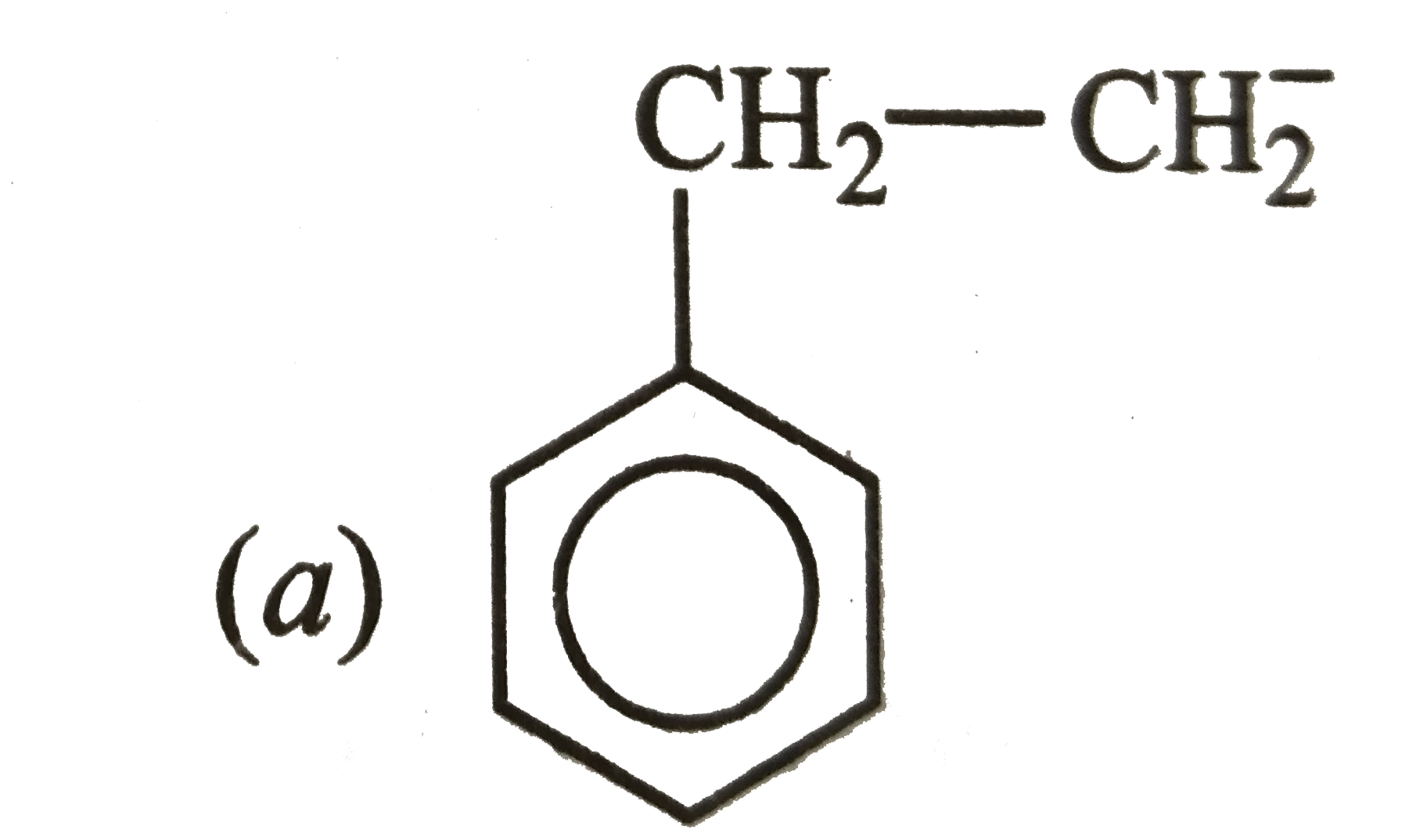
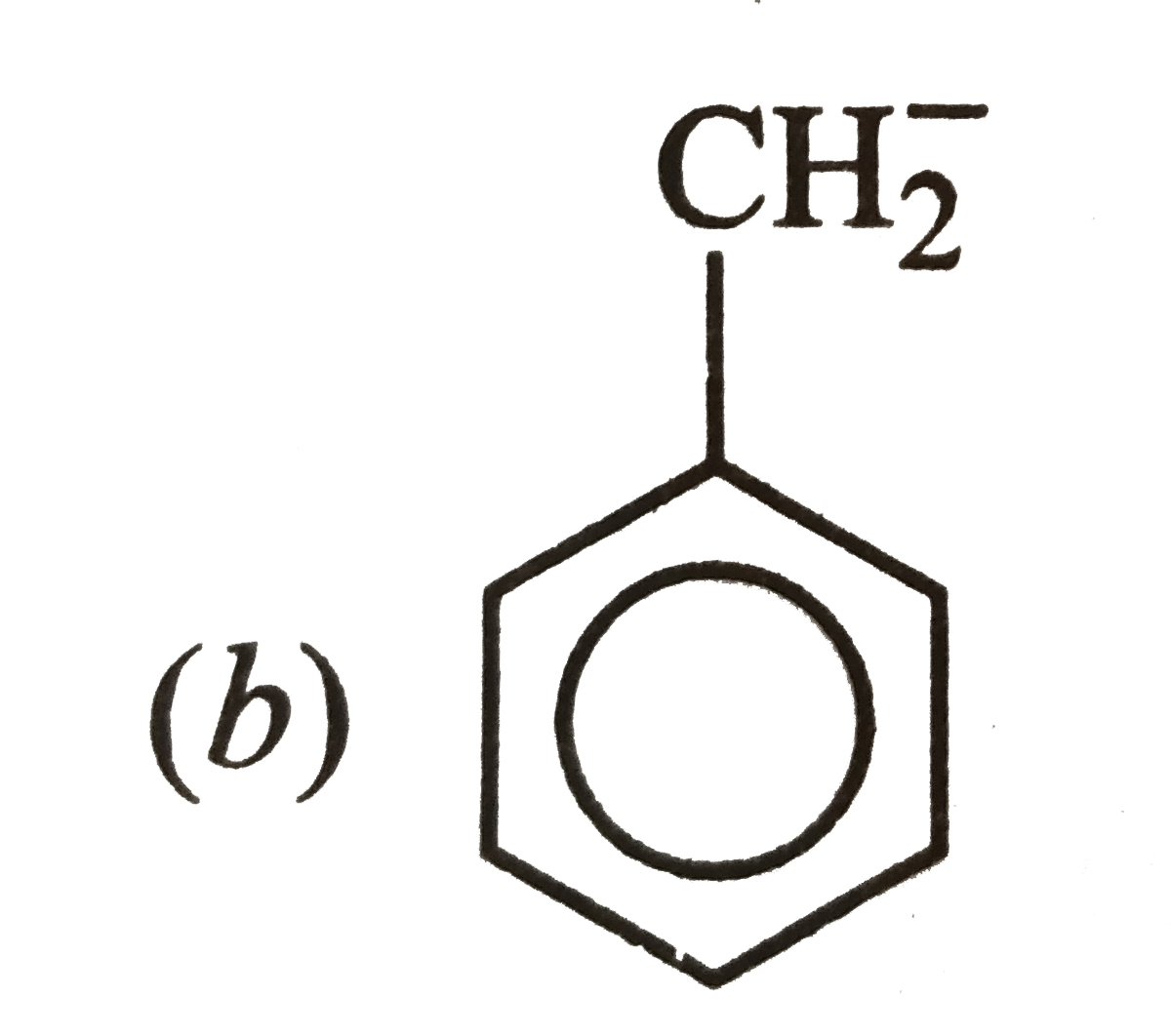
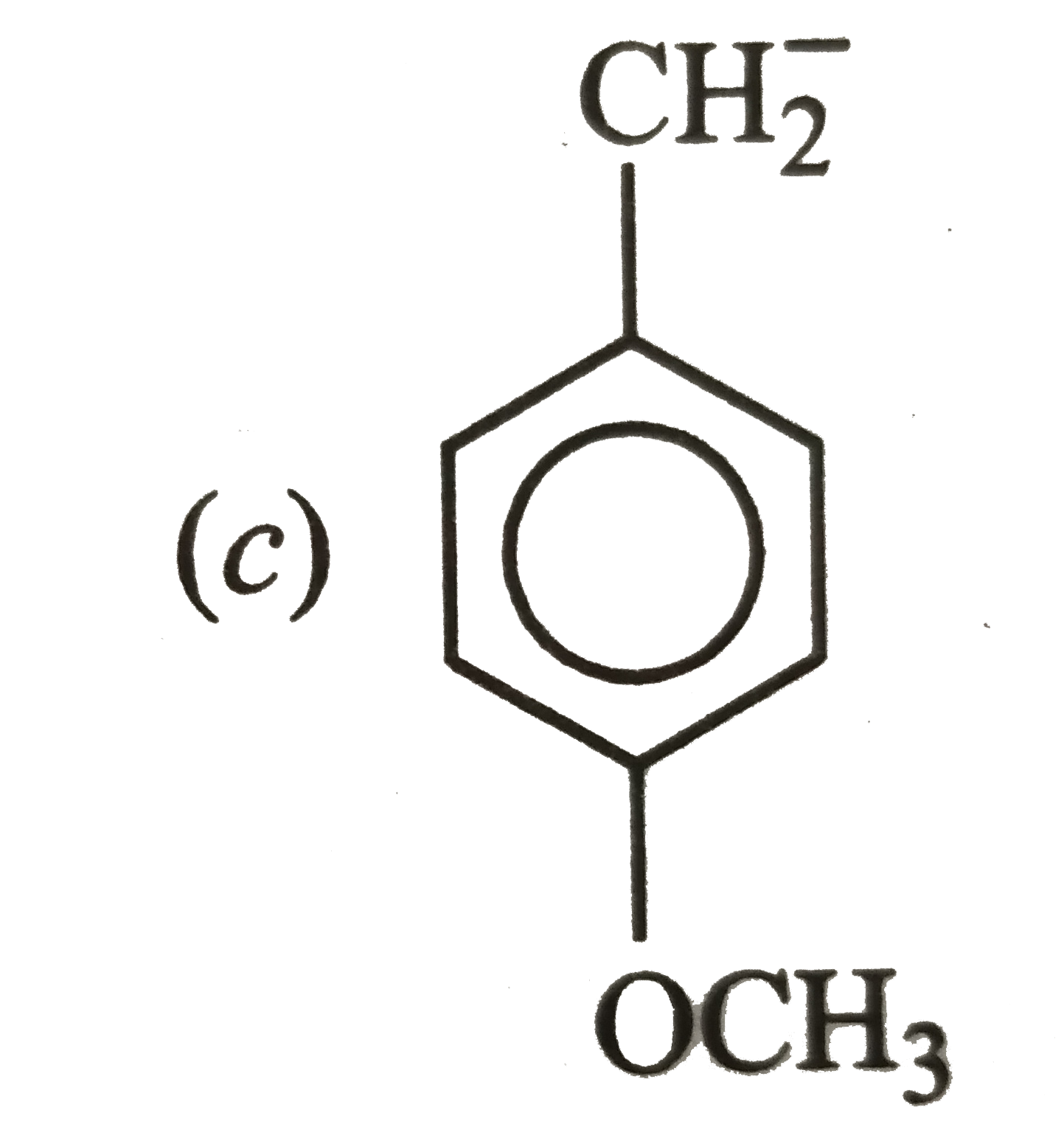
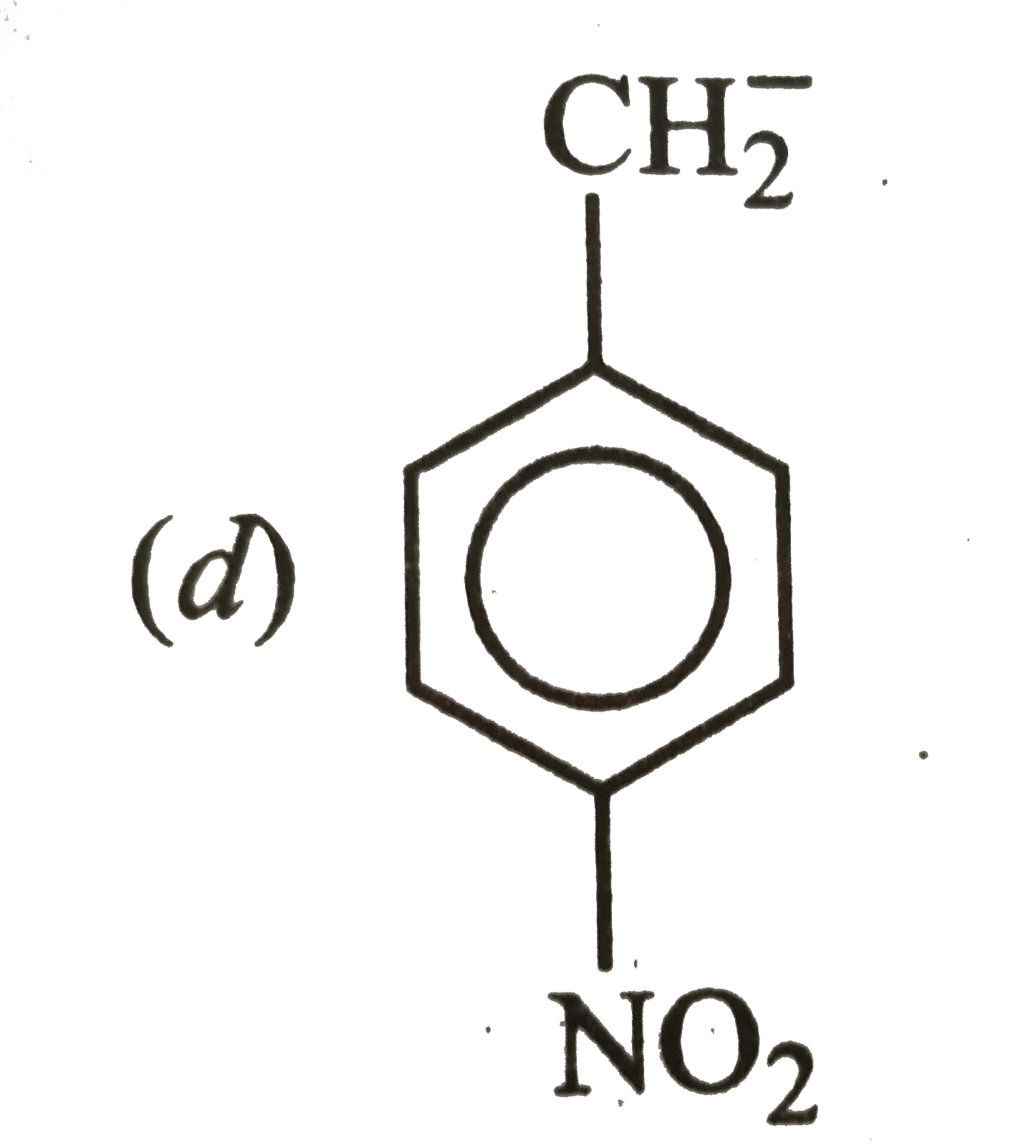
An organic reaction occurs through making and breaking of bonds. The breaking of bonds may occur either homolytically leading to the formation of radicals or heterolytically generating positively and negatively charged species. The neutral species (free radicals, carbenes, nitrenes, etc.) and positively charged species being electron deifcient are collectively called electrophiles while neutral and negatively charged species which are electron rich are called nucleophiles. An organic reaction usually involves the attack of a reagent (radicals, positively and negatively charged species) on the substrate molecule). The substrate molecule, although as a whole electrically neutral, has centres of low and high electron density due to displacement of bonding electrons. These electrons displacements occur through inductive,electromeric occur through inductive, electromeric, resonance and hyperconjugation effects. Whereas inductive effects involve displacement transfer of n-and pi-electrons along a conjugated system. Hypercongation effects, on the other hand, involve sigma-pi-conjugation. Both inductive and hyperconjugation effects can be used to explain the stability of carbocations and free radicals which follow the stability order: 3^(@) gt 2^(@) gt 1^(@). The stability of carbanions, however, follows opposite order. The stability of a molecule can be judged on the basis of contribution of its resonance structures. Resonance structures have same position of nuclei and have same number of unpaired electrons. Among resonance structures, the one which has greater number of covalent bonds, has less separation of opposite Charges, a negative charge on more electronegative and a positive charge on a more electropostive atom are more stable than others. The most stable carbanion among the following is |
|
Answer»
|
|
| 23. |
An organic reaction occurs through making and breaking of bonds. The breaking of bonds may occur either homolytically leading to the formation of radicals or heterolytically generating positively and negatively charged species. The neutral species (free radicals, carbenes, nitrenes, etc.) and positively charged species being electron deifcient are collectively called electrophiles while neutral and negatively charged species which are electron rich are called nucleophiles. An organic reaction usually involves the attack of a reagent (radicals, positively and negatively charged species) on the substrate molecule). The substrate molecule, although as a whole electrically neutral, has centres of low and high electron density due to displacement of bonding electrons. These electrons displacements occur through inductive,electromeric occur through inductive, electromeric, resonance and hyperconjugation effects. Whereas inductive effects involve displacement transfer of n-and pi-electrons along a conjugated system. Hypercongation effects, on the other hand, involve sigma-pi-conjugation. Both inductive and hyperconjugation effects can be used to explain the stability of carbocations and free radicals which follow the stability order: 3^(@) gt 2^(@) gt 1^(@). The stability of carbanions, however, follows opposite order. The stability of a molecule can be judged on the basis of contribution of its resonance structures. Resonance structures have same position of nuclei and have same number of unpaired electrons. Among resonance structures, the one which has greater number of covalent bonds, has less separation of opposite Charges, a negative charge on more electronegative and a positive charge on a more electropostive atom are more stable than others. The C-C bond length in propene s little shorter (1.49 Å) than the C-C bond length (1.54 Å) in ethane. This is due to |
|
Answer» `+I` EFFECT of `CH_(3)` GROUP |
|
| 24. |
An organic reaction occurs through making and breaking of bonds. The breaking of bonds may occur either homolytically leading to the formation of radicals or heterolytically generating positively and negatively charged species. The neutral species (free radicals, carbenes, nitrenes, etc.) and positively charged species being electron deifcient are collectively called electrophiles while neutral and negatively charged species which are electron rich are called nucleophiles. An organic reaction usually involves the attack of a reagent (radicals, positively and negatively charged species) on the substrate molecule). The substrate molecule, although as a whole electrically neutral, has centres of low and high electron density due to displacement of bonding electrons. These electrons displacements occur through inductive,electromeric occur through inductive, electromeric, resonance and hyperconjugation effects. Whereas inductive effects involve displacement transfer of n-and pi-electrons along a conjugated system. Hypercongation effects, on the other hand, involve sigma-pi-conjugation. Both inductive and hyperconjugation effects can be used to explain the stability of carbocations and free radicals which follow the stability order: 3^(@) gt 2^(@) gt 1^(@). The stability of carbanions, however, follows opposite order. The stability of a molecule can be judged on the basis of contribution of its resonance structures. Resonance structures have same position of nuclei and have same number of unpaired electrons. Among resonance structures, the one which has greater number of covalent bonds, has less separation of opposite Charges, a negative charge on more electronegative and a positive charge on a more electropostive atom are more stable than others. Out of the following, the one containing only nucleophiles is |
|
Answer» `NH_(3), CN^(-), CH_(3)OH` |
|
| 25. |
An organic reaction occurs through making and breaking of bonds. The breaking of bonds may occur either homolytically leading to the formation of radicals or heterolytically generating positively and negatively charged species. The neutral species (free radicals, carbenes, nitrenes, etc.) and positively charged species being electron deifcient are collectively called electrophiles while neutral and negatively charged species which are electron rich are called nucleophiles. An organic reaction usually involves the attack of a reagent (radicals, positively and negatively charged species) on the substrate molecule). The substrate molecule, although as a whole electrically neutral, has centres of low and high electron density due to displacement of bonding electrons. These electrons displacements occur through inductive,electromeric occur through inductive, electromeric, resonance and hyperconjugation effects. Whereas inductive effects involve displacement transfer of n-and pi-electrons along a conjugated system. Hypercongation effects, on the other hand, involve sigma-pi-conjugation. Both inductive and hyperconjugation effects can be used to explain the stability of carbocations and free radicals which follow the stability order: 3^(@) gt 2^(@) gt 1^(@). The stability of carbanions, however, follows opposite order. The stability of a molecule can be judged on the basis of contribution of its resonance structures. Resonance structures have same position of nuclei and have same number of unpaired electrons. Among resonance structures, the one which has greater number of covalent bonds, has less separation of opposite Charges, a negative charge on more electronegative and a positive charge on a more electropostive atom are more stable than others. What is the decreasing order of stability of the ions ? I. CH_(3)-overset(+)(C)H-CH_(3)II. CH_(3)overset(+)(C)H-OCH_(3) III. CH_(3)-overset(+)(C)H-COCH_(3) |
|
Answer» `I GT II gt III` |
|
| 26. |
An organic reaction occurs through making and breaking of bonds. The breaking of bonds may occur either homolytically leading to the formation of radicals or heterolytically generating positively and negatively charged species. The neutral species (free radicals, carbenes, nitrenes, etc.) and positively charged species being electron deifcient are collectively called electrophiles while neutral and negatively charged species which are electron rich are called nucleophiles. An organic reaction usually involves the attack of a reagent (radicals, positively and negatively charged species) on the substrate molecule). The substrate molecule, although as a whole electrically neutral, has centres of low and high electron density due to displacement of bonding electrons. These electrons displacements occur through inductive,electromeric occur through inductive, electromeric, resonance and hyperconjugation effects. Whereas inductive effects involve displacement transfer of n-and pi-electrons along a conjugated system. Hypercongation effects, on the other hand, involve sigma-pi-conjugation. Both inductive and hyperconjugation effects can be used to explain the stability of carbocations and free radicals which follow the stability order: 3^(@) gt 2^(@) gt 1^(@). The stability of carbanions, however, follows opposite order. The stability of a molecule can be judged on the basis of contribution of its resonance structures. Resonance structures have same position of nuclei and have same number of unpaired electrons. Among resonance structures, the one which has greater number of covalent bonds, has less separation of opposite Charges, a negative charge on more electronegative and a positive charge on a more electropostive atom are more stable than others. The most stable free radical among the following is |
|
Answer» `C_(6)H_(5)CH_(2)overset(*)(C)H_(2)` |
|
| 27. |
An organic reaction occurs through making and breaking of bonds. The breaking of bonds may occur either homolytically leading to the formation of radicals or heterolytically generating positively and negatively charged species. The neutral species (free radicals, carbenes, nitrenes, etc.) and positively charged species being electron deifcient are collectively called electrophiles while neutral and negatively charged species which are electron rich are called nucleophiles. An organic reaction usually involves the attack of a reagent (radicals, positively and negatively charged species) on the substrate molecule). The substrate molecule, although as a whole electrically neutral, has centres of low and high electron density due to displacement of bonding electrons. These electrons displacements occur through inductive,electromeric occur through inductive, electromeric, resonance and hyperconjugation effects. Whereas inductive effects involve displacement transfer of n-and pi-electrons along a conjugated system. Hypercongation effects, on the other hand, involve sigma-pi-conjugation. Both inductive and hyperconjugation effects can be used to explain the stability of carbocations and free radicals which follow the stability order: 3^(@) gt 2^(@) gt 1^(@). The stability of carbanions, however, follows opposite order. The stability of a molecule can be judged on the basis of contribution of its resonance structures. Resonance structures have same position of nuclei and have same number of unpaired electrons. Among resonance structures, the one which has greater number of covalent bonds, has less separation of opposite Charges, a negative charge on more electronegative and a positive charge on a more electropostive atom are more stable than others. Which of the following series contains only electrophiles ? |
|
Answer» `H_(2)O, SO_(3), H_(3)O^(+)` |
|
| 28. |
An organic ompound contains C = 48, H = 8%. 0.48g of the compound was Kjeldahlised and the liberated ammonia required 19.2mL N//2 H_(2)SO_(4). Find the empirical formula of the compound. |
|
Answer» Solution :Percentage of nitrogen `= (1.4 xx N_(1) xx V_(1))/(W)` `W =` Mass of ORGANIC compound `= 0.48g` `N_(1) = (1)/(2) = 0.5, V_(1) = 19.2 mL` Percentage of `N = (1.4 xx 0.5 xx 19.2)/(0.48) = 28` Percentage of oxygen `= 100 - (48 +8 +28) = 16` Calculation of EMPIRICAL FORMULA. `{:("Element","Percentage","At.mass","Relative number of ATOMS","Simplest ratio of atoms"),("Carbon",48.0,12,(48)/(12)=4,(4)/(1)=4),("Hydrogen",8.0,1,(8)/(1)=8,(8)/(1)=8),("Nitrogen",28.0,14,(28)/(14)=2,(2)/(1)=2),("Oxygen",16.0,16,(16)/(16)=1,(1)/(1)=1):}` Empirical formula `= C_(4)H_(8)N_(2)O` |
|
| 29. |
An organic liquid vaporises at a temperature below its boiling point in steam distillation. Assign reason. |
| Answer» Solution :Steam distillation is ACTUALLY distillation under REDUCED PRESSURE. The vapour pressure of both water vapours and ORGANIC liquid placed in the distillation flask BECOME equal to the atmospheric pressure. This means that both of them will vaporise at a temperature which is less than their normal boiling point temperatures. | |
| 30. |
An organic liquid of the composition C_(4)H_(8)O_(2) yields a sodium salt of an acid C_(3)H_(6)O_(2) and methanol on boiling with NaOH solution. The given liqud is |
|
Answer» `CH_(3)CH_(2)COOCH_(3)` |
|
| 31. |
An organic liquid decomposes below its boiling point. How will you purify ? |
| Answer» SOLUTION :DISTILLATION under REDUCED PRESSURE, i.e., VACUUM distillation. | |
| 32. |
An organic fruit smelling compound on analysis has the following composition by mass: C = 54.54%, H = 9.09%, O = 36.36%. Find out the molecular formula of the compound. The vapour density of the compound was found to be 44 |
Answer» SOLUTION :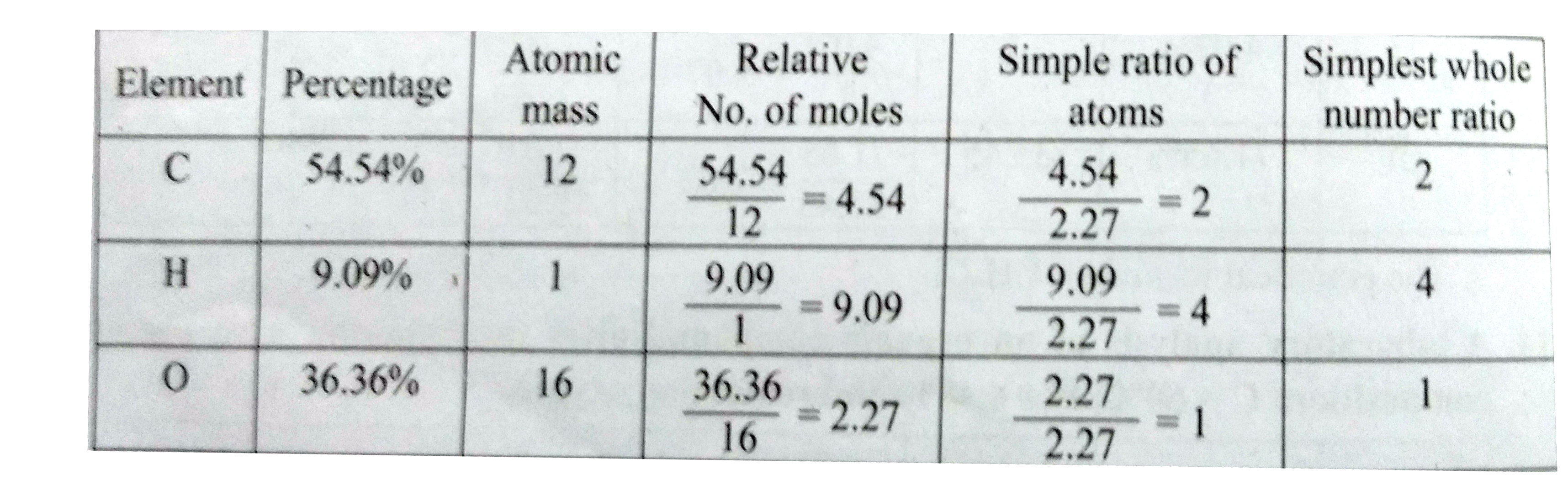 `:.` The empirical formula is `C_(2)H_(4)O`. The empirical formula mass `(C_(2)H_(4)O) = (12xx2) + (1xx4) + (16xx1)` = 44 Molecular mass = 2`XX` Vapour density = `2xx44=88` N = `("Molecular mass")/("Empirical formula mass")=88/44=2` Molecular formula = ` ("Empirical formula")_(n)` = `(C_(2)H_(4)O)_(2)` `:.`Molecular formula = `C_(4)H_(8)O_(2)` |
|
| 33. |
An organic compund (A) has a molecular formula C_(2)H_(6)O it is one of the primary alcohol. A reacts with acidified potassium dichromate to give B.B on further undergoes to oxidation reaction to give C.C on reacts with SOCI_(2) to give D which is chlorinated product.Identify A,B,C and D, explain the equation. |
|
Answer» Solution :(i) `C_(2)H_(6)O` is `CH_(3)-CH_(2)-OH` which is a primary alcohol (A). (II) `CH_(3)-CH_(2) -OH (A)` reacts with `H^(+)/K_(2)Cr_(2)O_(7)` to give ACETALDEHYDE (B) `underset"(Ethanol (A)" (CH_(3)- CH_(2) - OH) overset (H^(+)//K_(2)Cr_(2)O_(7)) to underset ("Acetaldehyde (B)")(CH_(3)CHO )` (iii) `CH_(3)CHO(B)` which on further oxidation to give acetic ACID (C). `underset("Acetaldehyde (B)")(CH_(3)CHO) overset("O") to underset("Acetic Acid (C)")(CH_(3)COOH)` (iv) Acetic acid reacts with `SOCI(2)` to give ACETYL chloride (D). `underset("Acetic acid (C)") (CH_(3)COOH)overset("O") to underset ("Acetyl chloride (D)") (CH_(3)COCI+ SO_(2) + HCI)` `{: ( "(A)`CH_(3)-CH_(2)-OH`", "Ethanol"),( "(B)`CH_(3)CHO`", "Acetaldehyde") , ("(C)`CH_(3)COOH`" , "Acetic acid"),("(D)`CH_(3)COCI` " ,"Acetyl chloride") :}` |
|
| 34. |
An organiccompounds which decomposes below its boiling point can be purified by........ |
|
Answer» |
|
| 35. |
An organic compounds A of a molecular formula C_6H_6Which is simple aromatic hydrocarbon. A react with Cl_2 in pressure of FeCl_(3) to give B. B reacts with NaOH at 350"^(@)C and 300 atm pressure to give C. B again reacts with ammonia at 250"^(@)C and 50 atm pressure to give D. Identify A,B,C and Dexplain the reaction. |
|
Answer» SOLUTION :1. `underset("BENZENE")(C_6H_6+Cl_2) OVERSET(FeCl_3)to underset("Chlorobenzene"(B))(C_6H_5Cl+HCl` . `C_6H_5 Cl+NaOH overset(350^(@)C)underset(300atm)to underset("Phenol"(C))(C_6H_5OH+NaCl` `C_6H_5Cl+2NH_3 overset(550^(@)C)underset(50atm)to underset("Aniline"(D))(C_6H_5NH_2)+NH_4Cl` 
|
|
| 36. |
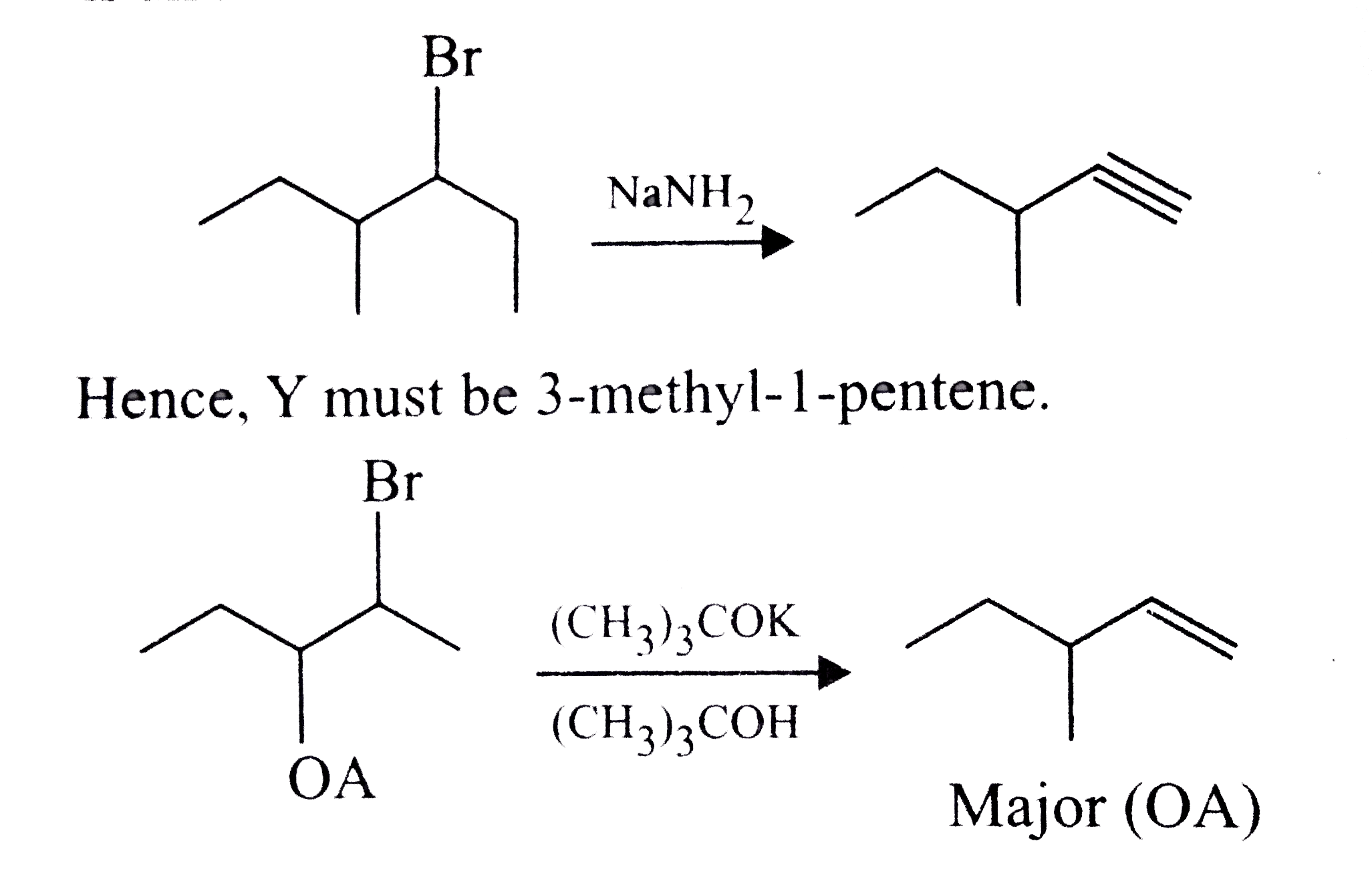
An organic compound X(C_(6)H_(13)Br) is optically active, X on treatment with (CH_(3))_(3)COK in (CH_(3))_(3)COH gives Y(C_(6)H_(12)), a major product. Y on treatment with Br_(2) - C Cl_(4) in the presence of FeBr_(3) gives a dibromide which on further treatment with NaNH_(2) givesC_(6)H_(10) which is still optically active. Hence, X and Y respectively are |
|
Answer»
|
|
| 37. |
An organic compound (X) with molecular formula C_(7)H_(8)O is insoluble NaHCO_(3) but dissolves in NaOH. When treated with bromine water (X) rapidly gives (Y), C_(7)H_(5)OBr_(3). The compound (X) and (Y) respectively are |
|
Answer» BENZYL ALCOHOL and 2,4,6 tribromo-3-methoxy benzene |
|
| 38. |
An organic compound 'X' on treatment with acidified K_(2)Cr_(2)O_(7) gives a compound 'Y' which reacts with I_(2) and sodium carbonate to form Tridomethane. The compound 'X' is |
|
Answer» `CH_(3)OH` |
|
| 39. |
An organic compound x having molecular mass 60 is found to contain C = 20%, H = 6.67% and N = 46.67%, while rest is oxygen. On heating, it gives ammonia along with a solid residue. The solid residue gave violet colour with alkaline copper sulphate solution. The compound X is |
|
Answer» `CH_(3)CH_(2)CONH_(2)` `C:H:N:O = (20)/(12) : (6.67)/(1.0) : (46.67)/(14) : (26.66)/(16)` = 1.67 : 6.67 : 3.33 : 1.67 = 1 : 4 : 2: 1 `:. E.F. = CH_(4)N_(2)O` Now E.F. wt. = 12 + 4 + 28 + 16 = 60 and Mol. Wt = 60 (given) `:. M.F. = E.F. xx ("Mol. wt.")/("E.F. wt") = CH_(4)N_(2)O xx (60)/(60)` `= CH_(4)NH_(2)O` Now out of the given FOUR compounds `(CH_(3)CH_(2)CONH_(2) (a) = C_(3)H_(7)NO, CH_(3)CONH_(2) (c) = C_(2)H_(5)NO, CH_(3)NCO (b) = C_(2)H_(3)NO)`, the `CH_(4)N_(2)O`, there-fore, the given compound is urea, `NH_(2)CONH_(2)`. Further since urea on heating loses `NH_(3)` and gives a residue called biuret which gives a violet colouration with alk. `CuSO_(4)` solution, therefore, the given organic compound is `NH_(2)CONH_(2)`, i.e., option (d) is correct.  `underset("Biuret")(NH_(2)CONHCONH_(2)) OVERSET(Alk. CuSO_(4))rarr` Violet colouration |
|
| 40. |
An organic compound X contains Y and Z impurities. Their solubilities differ in a chosen solvent. They may be separated by : |
|
Answer» simple crystalization |
|
| 41. |
An organic compound X (C_(4)H_(8)O_(2)) gives positive test with NaOH and phenophtalein. Structure of X will be : |
|
Answer» `CH_(3)-CH_(2)-CH_(2)-underset(O)underset(||)(C)-OH` |
|
| 42. |
An organic compound with the formula C_6 H_(12) O_6 forms a yellow crystalline solid with phenylhydrazine and gives a mixture of sorbitol and mannitol when reduced with sodium. Which among the following could be the compound? |
|
Answer» fructose `UNDERSET("Fructose")({:(""CH_(2)OH),("|"),(""C=O),("|"),(HO-C-H),("|"),(2H-C-OH ),("|"),(" "H-C-OH),("|"),(""CH_(2)OH):})overset(+4[H])to""underset("Methanol")({:(""CH_(2)OH),("|"),(HO-C-H),("|"),(HO-C-H),("|"),(" "H-C-OH),("|"),(" "H-C-H),("|"),(""CH_(2)OH):}) + "" underset("Sorbitol")({:(""CH_(2)OH),("|"),(" "H-C- H),("|"),(HO-C-H),("|"),(" "H-C-OH),("|"),(" "H-C-OH),("|"),(""CH_(2)OH):})` |
|
| 43. |
An organic compound with the formula C_(10)H_(8) absorbs 5H_2 during hydrogenation. The number ofrings present in it is________ |
Answer» SOLUTION :
|
|
| 44. |
An organic compound with moleular formula, C_(2)H_(6)O_(2) evolves H_(2) when treated with sodium metal and gives two moles of formaldehyde on oxidation with HIO_(4). The compound is |
|
Answer» Acetic acid `{:(CH_(2)OH""CH_(2)ONA ""CH_(2)OH),("|"overset(Na)rarr"|" +(1)/(2)H_(2)"|" + HIO_(4) rarr2HCHO+HIO_(3)+H_(2)O),(CH_(2)OH ""CH_(2)OH""CH_(2)OH),():}` |
|
| 45. |
An organic compound with molecular formula C_(7)H_(8)O dissolves in NaOH and gives characteristic colour with FeCl_(3). On treatment with Br_(2) it gives tribromo product C_(7)H_(5)OBr_(3). The compound is |
|
Answer» p-Hydroxybenzene 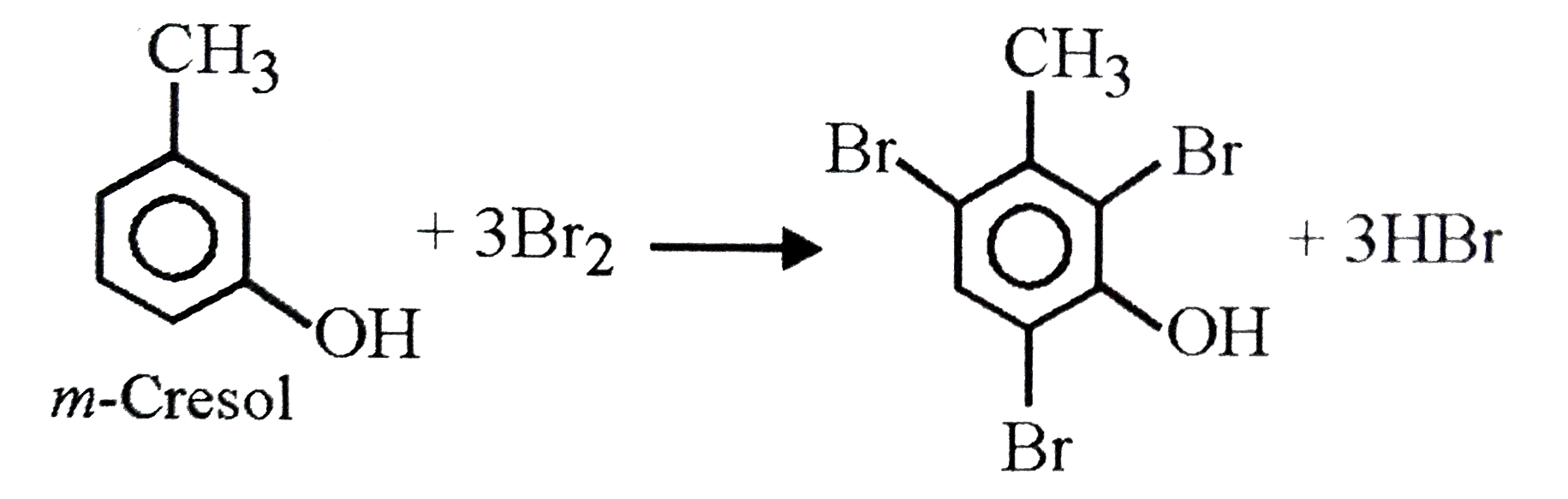
|
|
| 46. |
An organic compound with molecular formula C_(6)H_(10) is not reduced by H_(2)//Pd//BaSO_(4). From the given options, the compound may be : |
|
Answer» I, II |
|
| 47. |
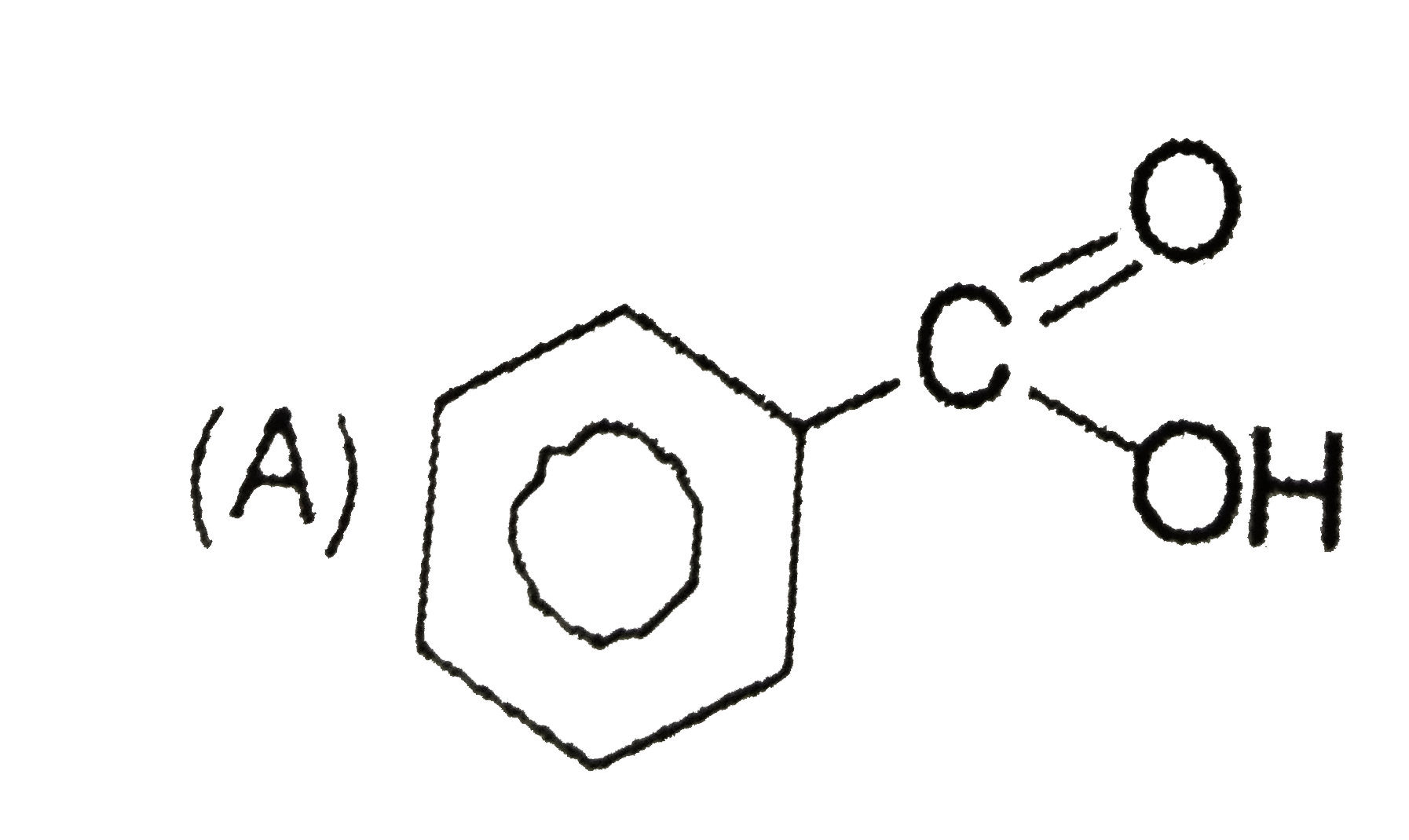
An organic compound with 68.9% of C and 4.92 % of H, is aromatic and gives CO_(2) with NaHCO_(3). The organic compound is |
|
Answer»
|
|
| 48. |
An organic compound which produces a bluish green coloured flame on heating in presence of copper is |
|
Answer» chlorobenzene |
|
| 49. |
An organic compound weighing 0.15 g gave on carius estimation, 0.12 g of silver bromide. The percentage of bromine in the compound will be close to ............... . |
|
Answer» |
|
| 50. |
An organic compound was found to have contained carbon = 40.65%, hydrogen = 8.55% and Nitrogen = 23.7%. Its vapour - density was found to be 29.5. What is the molecular formula of the compound? |
| Answer» SOLUTION :`C_2H_5NO` | |